
Manufacturing Methods and Processes
How you assemble your products decides how efficiently your manufacturing business operates. Labour and technique impact production costs, while accuracy and quality affect customer satisfaction. The solution to high costs and inefficient production is to implement the best manufacturing processes for your requirements.
Manufacturing production is the process of making finished goods from raw products through the use of human and machine labour, in the most efficient and cost-effective way. There are three core methods of manufacturing production: Make to Stock (MTS), Make to Order (MTO) and Make to Assemble (MTA).

What Are Manufacturing Processes?
Manufacturing processes are how a business produces the products they sell. They include all the production methods used to convert raw materials or components into a finished good.
Modern manufacturing processes involve a combination of machinery and automated technology systems, such as CAD/CAM, robotics, and computer-controlled equipment. These technologies help streamline production, reduce errors, and increase output.
What is Make to Stock?
Make to Stock (MTS) is the process of manufacturing production in which the products are created in bulk on the basis of expected demand from customers. That demand is assessed by sophisticated forecasting tools and then delivered at the point of consumer purchase.
Why use Make to Stock manufacturing?
The benefits of the make-to-stock manufacturing production are severalfold. The idea is to create just enough stock to meet customer orders, based on accurate forecasts of demand. Undertaking this successfully means there are efficiencies at every step in the manufacturing process, right through to customer delivery.
The forecasting process relies on technology that can assess past demand to feed into an algorithm assessing likely future orders.
Doing this well enables the manufacturer to order raw products in bulk and produce a high volume of products that ideally match customer demand. Accurate forecasting also allows workflow and labour to be managed appropriately. This means orders are able to be fulfilled with ease and efficiency, and there is little wastage or lost opportunity.
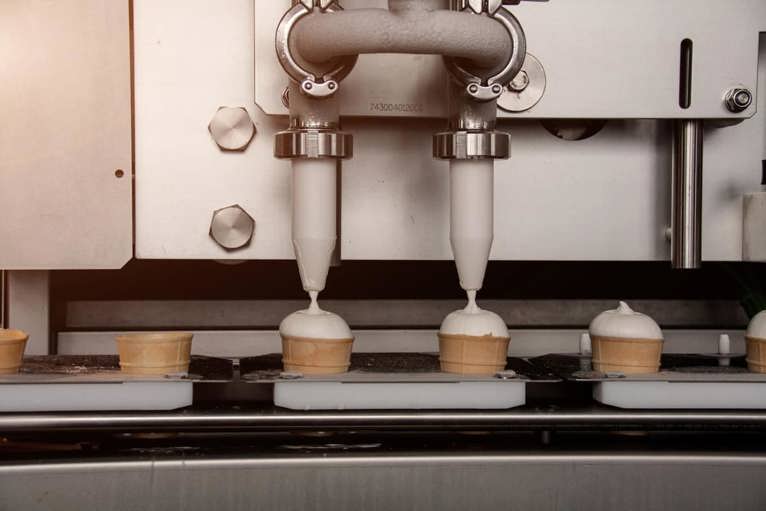
Who uses Make to Stock manufacturing?
Make to stock is regarded as a traditional method of manufacturing production, and is widely used by manufacturers. It is used particularly in high turnover industries that have relatively predictable consumer patterns, such as the retail sector.
Make to stock is also a useful manufacturing production system for industries that are influenced by seasonal changes or holidays such as Christmas, Easter and New Year. It is also useful in industries that evolve at speed, such as technology, where the products required can change rapidly.
Limitations of Make to Stock manufacturing
Make to stock depends on accurate forecasting of consumer demand. If those forecasts are wrong, the process can lead to insufficient stock to meet demand, and the company loses out on sales. On the flip side, it can lead to an oversupply of materials that go to waste. Forecasts are also used to structure workflow and staffing, and if they are wrong, this can lead to financial losses and production scheduling issues within the workforce.
How to improve the MTS method
The key aim for manufacturers looking to improve make-to-stock processes is to ensure forecasts are as accurate as possible. The reliability of the forecasts is the key to the manufacturer’s success or otherwise, as it affects every aspect of the production line’s efficiency.
If the forecasts predict fewer orders than are ultimately placed, the manufacturer is left scrambling to meet customer needs. Failing to do so is a lost opportunity and can also cause reputational damage. On the flip side, if more orders are forecast than ultimately placed, the manufacturer is left to manage an oversupply of stock. Some stock may be perishable and therefore go to waste. If stock is held, there are warehousing and labour costs to manage.
While forecasting tools and software are under constant improvement, variables in global economies and trends cannot always be predicted, and make to stock manufacturers to carry that risk.
What is Make to Order?
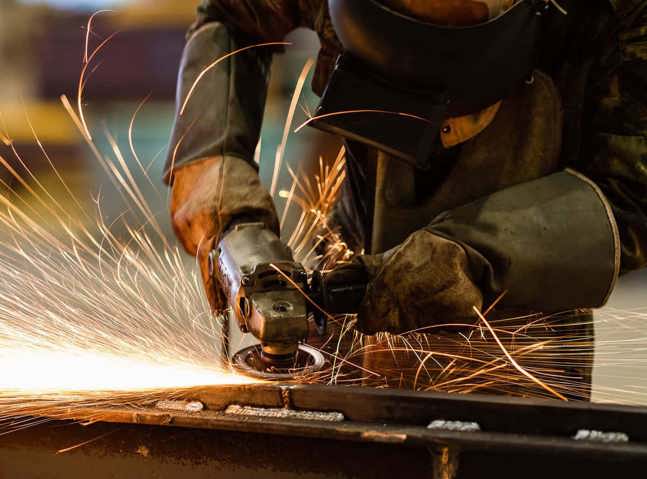
Make to Order (MOT) is, as the name suggests, a production process in which the manufacturing is done after the order has been received. This lends itself to bespoke manufacturing that suits particular customer or outlet needs. Unlike make-to-stock, make-to-order production begins when an order is received, and therefore has a lower chance of wastage or inefficient production workflow.
Why use Make-to-Order manufacturing?
Made-to-order is driven by specific and detailed customer demand. Manufacturers know the exact order and how much material is needed. This means there is little wastage of inventory or labour in creating the product for sale to the customer.
Who uses MTO manufacturing?
Make to Order is generally used by large and complex organisations, such as defence, airlines or construction. These industries have a need for precise products and can, to a certain extent, absorb a longer lead time in receiving the goods.
Limitations of Make-to-Order production
The limitations of make-to-order are largely around irregular order patterns and the ability to manufacture a product within a reasonable time frame and deliver it to the customer.
Made-to-order products can be very specific, and as such, there is little visibility over what orders may be coming in at any time. The unreliability of orders and, thus, financial stability can be very difficult for a manufacturer to manage.
When an order does come in, making and delivering it will inevitably take longer than those made under a make-to-stock system, as production only takes place once the order has been placed. There are numerous hiccups that can come into play as a result — lack of raw materials, delays in the delivery of materials or components, and workflow being difficult to manage due to the unpredictability of orders being made and particular skills required.
How to improve the MTO process
The make-to-order process is under constant scrutiny by manufacturers and customers alike, both looking for ways to streamline the system and ensure better outcomes, both with the production process and the delivery process.
Mistake-proofing
Mistake-proofing aims to develop products quickly without costly errors. This involves correcting past errors and future-proofing against repeated error — perhaps by implementing inventory management software to control the flow of goods, upskilling staff, or assessing supplier performance.
Load levelling
Load levelling is a useful tool for make-to-order manufacturers as it allows small batches of orders to be developed in a time-effective manner. This also allows manufacturers to quickly identify and resolve any issues that may affect the next batch or overall order.
Further, software is also being developed that is able to better manage the make-to-order manufacturing process by rapidly assessing an order, and matching it against existing inventory, supply chains and labour management.
Iterative improvements
Constant improvements in make-to-order manufacturing are central to this process, which, when it is done well, minimises waste, maximises resources and delivers a product specifically designed to the customer’s needs.
What is Make to Assemble?
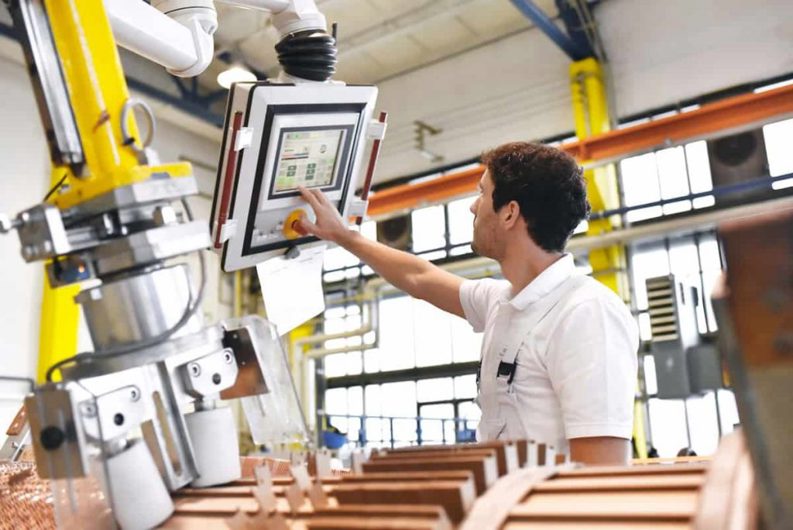
Make to assemble is a mix of the make to stock and make to order processes, whereby the manufacturer stocks the basic requirements of any order but waits for orders to come in before creating the final product.
Why use Make to assemble manufacturing?
Making to assemble has many advantages, notably that it tackles various issues raised by the make-to-stock and make-to-order processes, and attempts to resolve them through what is effectively a hybrid process.
Because the basic elements of the product are already in stock, making to assemble doesn’t face the same risks of supply or need such a long delivery timeframe as the make-to-order method.
Furthermore, as it builds the product on the basis of actual orders, it avoids the risks of overstocking or understocking faced by the make-to-stock method. It can still use forecasting methods used in make-to-stock processes to maintain efficiencies with inventory and workflow.
Make to assemble is also relatively cost-effective for the manufacturer as there is a minimal amount of stocked materials and goods, which allows for stable warehousing and storage costs. A make-to-assemble process can still deliver relatively bespoke products, but in a much shorter timeframe than make-to-order.
Who uses MTA manufacturing?
Make to assemble is used across different sectors, for example, the food assembly or computing sector. Laptops or desktop computers are often assembled through this manufacturing process, as it is the most cost-effective way of getting through reasonably high numbers of orders without undue delays in delivery. Make-to-assemble is also used in the consumables sector, with non-perishable stock held in warehouses and the perishable elements added just before delivery.
How to improve the MTA process
Like the make-to-stock method, the make-to-assemble method relies on demand forecasting, so it faces the same reliability issues. Forecasting can be a notoriously tricky task, and getting it wrong, even if only by a small margin, can lead to oversupply or undersupply of stock, and subsequent wastage or inability to satisfy orders.
Further, a two-step system of producing the orders can lead to some complications. Make to assemble relies on the efficient assembly processes, and ensures that the pre-ordered basic components and bespoke sub-parts are put together properly by trained and skilled staff.
Any lapses in the assembly line process can lead to wastage or flawed products, which can cause significant financial losses. As such, the assembly line process does need to be run extremely efficiently and effectively for the process to be optimised.
Skilled staff also need to manage quality control and order delivery to ensure the build of each product is done to the exact specifications of the customer and delivered as promptly as possible.
The Operational Decision Matrix
| Strategy | Production Complexity | Demand Predictability | Required Lead Time | Best For |
| MTS | Low to medium | High | Short | High-volume standardised products |
| MTO | High | Low | Long | Customised, bespoke products |
| MTA | Medium | Moderate | Medium | Semi-custom products with modular components |
Choosing the right manufacturing strategy, Make to Stock (MTS), Make to Order (MTO), or Make to Assemble (MTA), depends on several critical factors: product complexity, demand predictability, and required lead time. The table below provides a quick comparison, followed by detailed explanations for each approach.
Make to Stock (MTS)
MTS is ideal for businesses producing standardised goods with predictable demand patterns. By leveraging accurate forecasting tools, manufacturers can maintain optimal inventory levels and ensure rapid fulfilment. This approach works best for industries such as retail or consumer electronics, where speed and availability are critical. However, inaccurate forecasts can lead to overstocking or stockouts, so robust inventory management systems are essential.
Make to Order (MTO)
MTO suits manufacturers dealing with highly customised or complex products, such as aerospace components or construction materials. Production begins only after an order is confirmed, reducing waste and ensuring precise specifications. While this method minimises inventory costs, it requires longer lead times and careful scheduling to avoid delays. Advanced planning tools and supplier coordination are key to success.
Make to Assemble (MTA)
MTA offers a hybrid solution, combining the benefits of MTS and MTO. Manufacturers keep basic components in stock and assemble final products once orders are received. This approach reduces lead times compared to MTO while still allowing for some customisation. It’s commonly used in sectors like computing or food assembly, where modular components can be quickly configured to meet customer needs.
Types of manufacturing processes
The various types of manufacturing processes serve the diverse needs of industries and businesses that exist. Which process type you ought to use will depend on several factors, including:
- Material compatibility
- Product complexity
- Intended use
- Cost and efficiency
- Product design
- Customisation capabilities
- Environmental impact
Let’s look at five of the most common types of manufacturing processes.
1. Discrete manufacturing
Discrete manufacturing is a type of production process that entails the building of distinct and individual items. The result consists of identifiable units with unique characteristics, unlike continuous manufacturing, where identical products are produced in a continuous flow.
You’ll hear Bill of Materials (BOM) mentioned in conjunction with discrete manufacturing. This is a detailed list of all the components, parts, and materials needed to create a specific product.
In some cases, items are produced in batches or lots – known as batch production – where a certain number of identical units are manufactured before moving on to the next batch. This type of manufacturing is well-suited to customisable products, as each unit can be tailored to meet specific customer requirements of variations.
Discrete manufacturing is prevalent where products are assembled from individual parts or components. Examples include computers, household appliances, furniture, and machinery.
2. Repetitive manufacturing
Repetitive manufacturing is a type of production process that results in a standardised output of goods. Identical or highly similar products are manufactured in large quantities using an automatic chain of actions. A kitting process is often implemented to streamline these repeat productions.
Repetitive manufacturing aims to achieve high levels of efficiency while producing a large volume of consistently identical items. This manufacturing method is ideal if you have products with stable and predictable demand.
Because the process is consistent and repetitious, it’s difficult to allow for customisation or variations. The cycle time from start to finish is typically short. This makes repetitive manufacturing a preferred method for mass production of goods.
3. Batch manufacturing
Batch manufacturing is a production process that creates goods in groups or batches. A set quantity of products is manufactured at the same time, following a particular recipe, formula or set of instructions.
This method is commonly used by companies that sell products with limited quantities, a short shelf life, or that require specific formulations. For example, businesses inside the pharmaceutical, food and beverage, cosmetics, and chemical sectors.
Each batch is its own distinct unit and can be tracked separately as it moves through the manufacturing process. This enables a greater level of quality control and flexibility and removes some of the challenges of conducting a product recall.
4. Job shop manufacturing
Job shop manufacturing is the method of fulfilling custom or specialised orders – the production of goods that require unique processing. This type of manufacturing process is most common in industries where products require personalisation, such as metal fabrication, custom furniture, and printing.
Due to the complex production tasks involved, this manufacturing process typically relies more heavily on skilled labour than automation and robotics. Around 60% of manufacturers are using robotics for automation, increasing productivity by 25%.
Job shop manufacturing has a longer lead time for production. Careful planning and scheduling are required to ensure efficient use of resources and timely delivery. On the flip side, the ability to handle diverse and one-off items offers a significant advantage.
5. Continuous manufacturing
Continuous manufacturing involves the non-stop creation of goods. Materials are perpetually entered into the manufacturing process, and finished products are continuously exiting the production line. This results in the production of a large volume of items in a short cycle of time.
This method of manufacturing allows for a steady output and uses automated machinery and control systems to maintain a smooth product flow. Because it’s characterised by consistent quality and reduced production times, continuous manufacturing is the optimal choice for achieving efficient processes in large-scale production operations.
Continuous manufacturing requires a significant initial investment in automation and infrastructure. However, the ‘economies of scale’ reduce production costs per unit, making it a cost-effective long-term approach.
With less material handling required, the downtime created by frequent changeovers and setup is less of a problem when compared with other types of manufacturing processes. But the uninterrupted flow means that variations and customisations aren’t readily available, so it’s unsuitable for businesses with custom features.
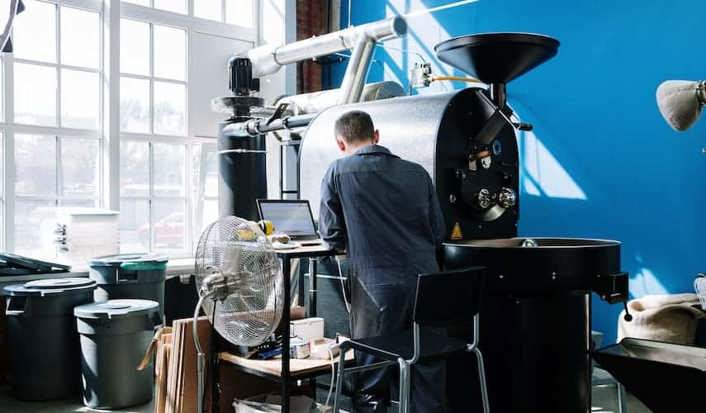
5 advanced manufacturing methods
Technology continues to revolutionise the way we produce goods. The manufacturing sector has been transformed by advances in machinery, robotics, and computer-aided design. Some of the processes supporting this technological revolution are outlined below.
1. Cloud manufacturing
Cloud manufacturing leverages cloud computing, data analytics, and the Internet of Things (IoT) to optimise how traditional manufacturing processes are carried out.
In cloud manufacturing, the design, production, and management of manufacturing operations are integrated into a cloud-based platform.
The advantages of cloud manufacturing include:
- Real-time data accuracy
- Optimised manufacturing accounting
- On-demand services
- Resource optimisation
- Flexibility
- Scalability
- Live data analytics
- Cybersecurity
- Accessibility
2. Lean manufacturing
Lean manufacturing is a manufacturing process that optimises production to minimise waste and costs, improve lead times, and increase customer satisfaction. The concept originated in Japan in the 1940s, at a Toyota car manufacturing facility.
Since its inception, lean manufacturing has been adopted by businesses across different sectors and industries around the world. Lean manufacturing continues to evolve thanks to modern innovations like autonomous robots, machine learning, and manufacturing software.
3. Mass production
Mass production is where large quantities of standardised products are produced at a high rate using assembly lines and specialised machinery. This approach aims to achieve economies of scale and efficiency by streamlining production processes, reducing costs, and meeting widespread consumer demands.
Mass production has been a significant driver of industrial growth and consumer access to a wide variety of affordable products. However, it’s important to note that mass production may not be suitable for products that require high levels of customisation in production processes.
4. Mass customisation
Mass customisation is a manufacturing strategy that combines the benefits of mass production with the ability to tailor products to meet individual customer needs and preferences.
This production process allows companies to offer a wide range of product variations without sacrificing the efficiency and economies of scale associated with traditional mass production methods.
Mass customisation represents a shift towards more customer-centric manufacturing, where businesses aim to strike a balance between offering tailored products and preserving operational efficiency.
By empowering customers with choices while maintaining economies of scale, mass customisation enables businesses to meet diverse market demands and foster stronger customer loyalty.
5. Artificial Intelligence (AI) manufacturing
Artificial Intelligence (AI) in manufacturing refers to the application of advanced machine learning algorithms, data analytics, and computer vision technologies to enhance various aspects of the manufacturing process.
According to e-bi, AI reduces defect rates through advanced quality control by 30%.
AI is used to optimise production, increase efficiency, improve quality, reduce downtime, and enable predictive maintenance by assessing vast amounts of data and making data-driven decisions in real time.
AI-driven robots can also perform repetitive tasks with precision and consistency, increasing manufacturing speed and reducing the need for human intervention. AI can also enable mass customisation by analysing customer data and preferences, allowing manufacturers to produce personalised products efficiently.
Ready to Optimise Your Manufacturing Process?
Take control of your production efficiency with the right strategy. Whether you’re implementing Make to Stock, Make to Order, or Make to Assemble, the right tools make all the difference.
Start streamlining your operations today with Unleashed’s powerful inventory management software. Start your 14-day free trial today!
