
Constrained vs. Unconstrained Demand Forecasting: Bridging Commercial Ambition with Operational Reality
A company’s inventory is a significant asset on their books; however, if frequent shortages or excesses happen, it can become a significant liability, costing the business's bottom line. It is imperative to manage inventory appropriately so that supply and demand are always balanced. However, all the inventory management techniques and software in the world will not solve the problem if demand forecasting is not done appropriately. For this, we must understand the nature of supply and demand constraints and how they affect Sales and Operational Planning (S&OP). We can then appreciate unconstrained and constrained forecasting, where they both shine and how they affect inventory procurement.

Supply and Demand
A customer wants a product or service which creates demand, and a company seeks to supply this demand. This is a generic and rather simplified view; however, if we take it further, we can group different activities in a company into the supply or demand boxes and can see how they affect our forecasting.
Promotional activities and marketing form part of the demand activities of a company, as this generates awareness and subsequent demand in the customer. When conducted appropriately, an optimum level of demand can be generated. Procurement, logistics and manufacturing form the supply side of the company, where they work tirelessly to supply the demand created by the marketing department.
What is Unconstrained Demand Forecasting?

An unconstrained demand forecast might seem over-optimistic, but for a business to take full advantage of market growth opportunities, it is essential to dream big. Particularly for companies using online inventory management systems, it’s easy to create both constrained and unconstrained demand forecasts that each represent valuable snapshots of what your business is and what your business could be.
An unconstrained forecast exists at the start of the S&OP process and must have no supply constraints imposed on it. This type of forecast does not factor in supply constraints as it aims to generate a picture of what could happen in terms of demand and profitability if the company were able to fulfil every order every time with no issues. This is the ideal and where every company wants to be; however, the reality is that supply constraints exist and must be considered.
Ignore any supply limitations when estimating total market demand. You might not have enough capital to purchase necessary supplies or maintain equipment, for example. You may not have sufficient manufacturing or stock-holding capacity to increase turnover. You might simply not have the manpower to answer all the sales enquiries that are clogging your phone line, or an online inventory management and ordering system! If you could access all needed materials and labour, fully increase production capacity and meet all anticipated market demand, how many sales could you make? That is your unconstrained forecast.
Are Unconstrained Forecasts 100% Unconstrained?
Unconstrained refers to the unconstrained forecast being a view of anticipated sales volume unaffected or limited by supply-side constraints.
To be effective, an unconstrained forecast must take into account, and be constrained by, market trends, currently planned sales and marketing activity and expected competitor or market changes. It is a projected view of potential sales volume based on a realistic analysis of actual expected demand.
It’s nice to dream that 10 billion consumers will want to buy your vacuum cleaner, but with only seven billion people on the planet, it’s probably not worth planning and paying to boost capacity to build 10 billion units. That’s not an unconstrained demand; it’s an unrealistic demand.
What is Constrained Demand Forecasting?

A constrained forecast is a forecast of sales or delivery volume that is realistically limited by the operational abilities and supply capacity of the business, particularly factors affecting the supply of materials, availability of labour, production capacity and cash flow. Think of a constrained forecast as supply-side focused.
Constrained demand forecasts ask the question: given production capacity and market demand, what is the total number of products your business can expect to sell? It is important for businesses to understand their realistic production capacity in order to inform and improve operations strategies and maximise actual sales.
This forecast incorporates all known supply constraints, so that the end product is a realistic picture of supply and demand and what the company can feasibly manage in terms of fulfilling orders.
The Constrained Forecasting Formula – Modelling Capacity and Prioritisation
When supply is limited, inventory managers need a framework to prioritise which demand to fulfil. A simple formula can help:
Constrained Forecast = MIN(Unconstrained Demand, Available Capacity)
This formula helps businesses allocate resources effectively and decide which orders to prioritise when capacity is tight.
Integration of the Two and the Vitality of Each
If a company finds that they will not feasibly be able to service the forecasted demand in the unconstrained forecast with their current resources and capabilities, they have a choice to make: either they can adapt their resources to increase their supply capability, or they can adapt the demand plan to reduce the unconstrained forecast to match their supply capability.
The importance of each forecast, unconstrained and constrained, comes to light in an Executive S&OP Meeting where supply, demand and future resources are being discussed. If you present only the constrained forecast, you certainly are giving the Executive Team a realistic picture; however, this provides no incentive to improve resources, scale up operations, increase supply and generate more income. What you should aim to do is provide them with a picture of what the company is and what the company can become to impress upon them the importance of supporting continued growth and resource provision.
Unfortunately, this can also swing the other way, whereby if the unconstrained forecast shows no real gains in terms of profitability, then the Executive Team could choose to retract resources and downsize operations to focus resources on more profitable areas.
Whatever the outcome of presenting both a constrained and unconstrained forecast, it is vital to provide both to decision-makers. Together, they give a better representation of the current supply and demand, and future profitability.
Forecasting Maximises Opportunity
An unconstrained forecast is more imaginative than a supply-side-constrained forecast. It plays a vital role in the formation of business strategy, helping management to plan for future growth. Imagine you sell vacuum cleaners.
Your unconstrained demand forecast suggests there are buyers for 1 million units annually, but your supply-side constraints (your constrained forecast) limit you to producing just 500,000 vacuum cleaners each year. This information will help management to make strategic decisions about where to invest in the business to maximise its ability to take advantage of unmet demand.
In the above scenario, half a million vacuum cleaner sales are being lost each year, with your profits being potentially sucked up by more responsive competitors. With clear forecasts, both constrained and unconstrained, management can maximise a company’s ability to meet sales demands and implement strategic plans to increase capacity and reduce supply-side costs.
Ready to Optimise Your Forecasting?
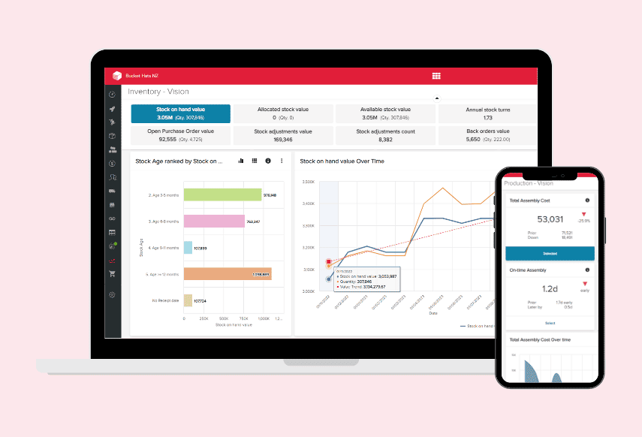
If you’re looking to bridge the gap between commercial ambition and operational reality, Unleashed Software offers powerful tools for inventory forecasting and demand planning.
Discover how Unleashed’s inventory management software can help you create accurate constrained and unconstrained forecasts, streamline your Sales & Operational Planning (S&OP), and maximise profitability.
Start your 14-day free trial today!


The Edge - March 2026

10 Wholesale Distribution Industry Trends for 2026

10 Inventory Management Trends to Watch for in 2026

MOQ Meaning: Minimum Order Quantity Made Easy [With Formulas]

OEM vs ODM explained – what’s best for manufacturers?

Centralised vs. Decentralised Supply Chains — The Pros and Cons

10 Critical Supply Chain Management & Logistics Trends for 2026

Batch Production: Definition, Pros & Cons, Methods & Examples

Bullwhip Effect in the Supply Chain: Examples, Causes, Solutions

Cin7 Reviews: Features, Strengths & Criticisms