
Warehouse Order Picking - Strategies & Tips
The warehouse order picking method you deploy determines how efficiently and inexpensively your warehouse operates. Add this to the fact picking speed, order accuracy, and labour costs all directly impact your profit margins, and it's easy to see why this is such an important decision to make.
To ensure you choose the optimum approach for your business, first consider the many factors that contribute to warehouse inventory management and order picking efficiency.

Table of Contents
The Integrated Picking and Packing Process in the Warehouse
Order fulfilment begins with order picking in the warehouse, followed by packing and shipping. An integrated process reduces touchpoints, minimises travel time, and ensures accuracy. Here’s the end-to-end journey:
- Order Receipt – Customer order enters the system.
- Pick List Generation – Inventory management software creates optimised pick lists.
- Picking Process in Warehouse – Items are retrieved using efficient order picking methods (e.g., batch, cluster, zone).
- Consolidation & Sorting – Items grouped by order, checked for accuracy.
- Packing – Products packed directly into shipping cartons to reduce double handling.
- Dispatch – Orders shipped via carrier integration.
What is Warehouse Order Picking?
Warehouse order picking is the process of gathering items needed to fulfil a customer order from their various locations around the warehouse.
An effective picking process can benefit your business by:
- Minimising fulfilment times
- Maximising picking accuracy
- Freeing up space in your warehouse
- Reducing the risk of employee injuries
- Increasing profitability
- Improving brand reputation
Order picking methods are often supported by various warehousing tools and technologies, such as inventory management software, mobile scanners, and carousels.
It’s estimated that order-picking makes up 63% of total warehousing costs, meaning this first step in the fulfilment process is especially important to get right.
Why Optimisation Matters
Order picking isn’t hard when you’ve got a fully optimised system in place. You’ll be able to pick more orders, more accurately, in less time. And that's the goal. But to get there, we must first break down warehouse order picking into its separate processes and identify which steps can be improved.
Optimising your warehouse order picking system is all about improving the overall ROI of your warehouse. You want to increase productivity and efficiency all while reducing total costs.
When done correctly, the order-picking tips in this list will help you:
- Minimise travel time between picking locations.
- Cut unnecessary steps out of the order-picking process.
- Implement the right equipment for your business.
- Process customer orders faster than before.
- Automate parts of the picking process you were doing manually.
Ultimately, these order-picking tips will save you time and money that can be reinvested into other areas – such as growing your business.
Order Picking Methods in Warehouse
Most warehouses use one or more of these five order picking methods:
- Single order picking
- Batch order picking
- Cluster order picking
- Wave order picking
- Zone order picking
Let's dive into what these are, the advantages of each method, and some examples of order picking methods in action.
Single order picking method (discrete picking)
Single order picking involves picking all items for a single order before moving on to the next one.
This is often done by printing a pick list and then picking each item as you work your way down the page. It works especially well in small warehouses with a low volume of daily orders.
The pros of single order picking:
- Inexpensive to implement and easy to teach.
- Reduces the risk of items from one order getting mixed up with items from another.
- Works well in small warehouses with minimal travel time between locations.
The cons of single order picking:
- It’s slow and inefficient when you have multiple orders to fulfil.
- Increases the risk of employee injury.
- Can become expensive in terms of labour costs as orders increase.
Pro tip for single order picking: Organise the line items on your pick list by location. This will cut down picking time as you’ll only have to visit each storage location once per order.
Batch order picking method (multi order picking)
Batch order picking is the process of picking a group, or ‘batch’, of orders by SKU instead of picking each order individually.
In most cases of batch picking, items from multiple pick lists with the same SKU are combined into a single pick task and later split into their separate orders before being packed.
The pros of batch order picking:
- Reduced travel time for the picker when fulfilling multiple orders of the same item.
- You can assign different pickers to different SKUs, making it even simple for them to know their role and perform it well.
- Faster than the single order picking method.
The cons of batch order picking:
- Requires extra investment in warehouse equipment, technology, and training.
- Not suitable for small warehouses.
- Orders must be sorted after picking, which can result in more errors.
Pro tip for batch order picking: Organise your warehouse layout by product popularity, so that the most in-demand products are nearest to the packing area. This will reduce time spent travelling between locations.

Cluster order picking method
Cluster order picking involves clustering multiple orders and picking the items for them at the same time.
This method is similar to batch and zone order picking, but rather than concentrating on similar SKUs or locations, pickers will pick all items from multiple orders in a single journey around the warehouse.
The pros of cluster order picking:
- Faster than the single order picking method.
- Possible with both minimal warehouse technology (by printing multiple pick lists) and sophisticated warehouse technology (by creating system-generated clusters).
- Can be adopted to work with automated picking equipment like vertical lift modules (VLMs) and carousels.
The cons of cluster order picking:
- Increased risk of items from different orders getting mixed up.
- More time travelling between storage locations.
- Not practical for large warehouses with many product locations.
Pro tip for cluster order picking: When using a method like cluster picking, where there’s an increased risk of mixed-up orders, double-check the picked items against your pick list or install a barcode scanner at the packing desk to catch picking errors before they reach the customer.
Wave order picking method
The wave order picking method is where specific orders that share a common factor are picked at a certain time of day during picking intervals called ‘waves’.
Orders are grouped into waves according to factors such as customer location, order date, or required-by date. These waves are then scheduled to be picked at set times of the day.
The pros of wave order picking:
- Improves picking efficiency when scheduling waves according to factors that will most benefit the business.
- It can be combined with other picking methods, such as single or batch picking.
- You can align picking times with when specific carriers come to collect, maximising the number of orders shipped per day.
The cons of wave order picking:
- Difficult to process last-minute or urgent orders.
- Requires knowledge of complex data, such as the value of prioritising certain shipping carriers or customer types.
- It can create downtime when pickers are forced to wait for the person ahead of them.
Pro tip for wave order picking: You can split orders into waves based on product type, product location, shipping location, shipping company, staffing, warehouse layout, and more. Choose the option that will most improve overall efficiency.
Zone order picking method
The zone order picking method is where a warehouse is divided into multiple physical locations, called ‘zones’, and pickers are each assigned a single zone.
Each picker is responsible for fulfilling the parts of orders containing SKUs that live in their zone. Zone picking is often combined with batch or wave order picking.
The pros of zone order picking:
- Pickers become familiar with items in their zone, which improves efficiency and reduces picking errors.
- Travel time is minimised while productivity is maximised.
- Can be combined with other picking methods, such as single or cluster order picking.
The cons of zone order picking:
- Not suited to small warehouses with a limited variety of products.
- Items are sometimes handled by multiple pickers, leaving more room for human error.
- Requires one scheduling period per shift; orders placed after the cut-off time must be held back until the next shift.
Pro tip for zone order picking: Rotate pickers between different zones on a quarterly or monthly basis. This will prevent employees from begrudging others for their allotted zone and create competent backup workers for different zones should somebody call in sick.
Other warehouse order picking methods to consider
There are a few more picking methods that can be used instead of or alongside the five we just mentioned. If your business has special requirements that go beyond the capacity of the methods above, you may wish to consider these options as well.
Pick-and-pass order picking method.
This is a type of zone order picking in which orders are passed down from one zone to another as pickers pick the items found in their designated zone.
Order consolidation picking method
This is a type of zone order picking where all pickers pick multiple SKUs simultaneously, working from the same wave of customer orders. Instead of passing the items on to the next zone, as with pick-and-pass order picking, items are sent directly to the packing area for consolidation.
Third-party logistics (3PL)
One method for simplifying your picking process is to outsource it to a 3PL. 3PL companies operate as a middleman between supplier and customer, managing the entire fulfilment process from their own warehouse or storage location on your behalf.
Batch Picking in Action
Imagine a medium-sized eCommerce warehouse receiving 200 orders daily. Instead of picking one order at a time, they implement batch picking:
- Generate Batch Pick List – Inventory software groups SKUs across 10 orders.
- Picker Route Optimisation – Picker follows the shortest path to collect all items for these SKUs.
- Consolidation Station – Items sorted into individual orders using barcode scanning.
- Packing – Orders are packed directly into shipping cartons to avoid double handling.
- Dispatch – Carrier integration ensures same-day shipping.
Tips for Efficient Order Picking Methods
Fulfilment is an essential part of inventory management for any product-based business.
And fulfilment begins with order picking.
The following warehousing tips will enable you to fully optimise this first and crucial step of the order fulfilment process.
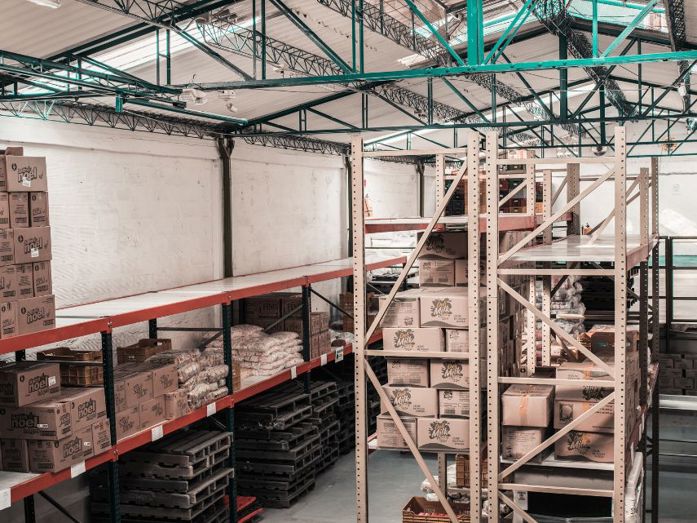
1. Optimise the layout of your warehouse
Travelling constitutes 50% of all order-picking activities in picker-to-parts systems, making it by far the most time-consuming activity.
We can infer, then, that minimising travel time greatly improves picking efficiency. This can be done in many ways, though not everything listed below will work for every warehouse.
Follow these tips to optimise the layout of your warehouse:
- Store frequently ordered products closer to the packing area, at eye level.
- Store rarely ordered products further away, above or below eye level.
- Don’t mix SKUs – if two products must share a location on the shelves, use bin dividers or stackable containers to keep them separated.
- Maximise storage space by installing adjustable shelving, bin dividers, and pallet racks.
- Keep aisles and shelves clean and clear of rubbish or debris.
Minimising travel time in the warehouse is one of the first things you should look at when improving your picking processes, as it typically costs nothing and can be implemented immediately.
2. Pick items directly into their shipping packages
When analysing your picking processes, you may find some steps unnecessary.
For example, picking an order, placing it in a cart, taking it to the packing area, and then packing it into a box or parcel for shipment requires double handling of the product.
Many businesses can save a few minutes each day by picking items directly into the packages they’ll be shipped in. This makes it especially practical when using a batch or cluster order picking method, as it will reduce the risk of items from different orders getting mixed up.
Depending on the goods you sell, you may choose to add boxes or envelopes to your picking cart – or if you’re shipping a large crate of goods, simply leave the crate at the end of each aisle as you pick items directly into the crate.
3. Use a warehouse order-picking method that fits your business
The order-picking method you opt for will greatly impact your warehouse management productivity. It affects how fast you’re able to fulfil orders and how few picking errors are likely to occur.
To ensure an optimal order-picking method, consider the following factors:
- Warehouse size
- Order volume
- Time it takes to fulfil an order
- Risk of picking mistakes
- Time it takes to train employees
- Total cost of necessary tools and technologies
- Labour costs
Single or cluster order picking is ideal for small warehouses, warehouses with a low volume of daily orders, and businesses where picking accuracy and minimal costs are the main priority.
Conversely, batch, wave, and zone order picking methods are all better suited to larger warehouses, warehouses with a high volume of daily orders, and businesses where short fulfilment times are the main priority.
Many businesses prefer to combine picking methods – for example, batch-wave picking – to create a system that’s perfectly tailored for them.
4. Remain flexible and be prepared to shift picking methods
Businesses grow, and technology evolves. Don’t let your picking methods stagnate as the world moves on around them.
A good way to prepare for growth is to identify the KPIs that will justify a change in systems.
For example, you may determine that the single order picking method will only be efficient until you hit 50 orders per day, at which point it would be prudent to switch to batch picking.
Identifying these milestones early on will help you make a timely switch before your old system is completely overwhelmed.

5. Choose the right tools and equipment for picking orders
There are dozens of warehousing tools that can be used to reduce picking time and increase accuracy.
However, not every business needs a forklift or barcode scanners.
Here's a list of popular order-picking tools and who they're suitable for:
- Barcode scanners: Useful if you’re looking to reduce picking errors or connect your picking process to your inventory management software.
- Forklifts, lift trucks, and pallet jacks: If you regularly receive or store goods on pallets, then investing in a machine to move them around can reduce weekly travel time by hours.
- Ladders and step stools: Keeping a ladder or step stool nearby will make it much simpler and safer to retrieve the goods you store in hard-to-reach locations. In a large warehouse with multiple elevated storage locations, it can be economical to store a ladder in each area – rather than carry the same one back and forth across the warehouse floor.
- Shelves, pallet racks, and A-frames: Storing products haphazardly can make it difficult to find what you’re looking for. That’s why manual storage solutions, such as shelves and pallet racks, are fundamental additions to most warehouses.
- Carousels and lift modules: Automated storage and retrieval machines, such as Vertical Lift Modules and Vertical Carousel Modules, allow you to maximise storage space while automating the picking process. As installation and equipment can be quite expensive, we recommend investing only if you can guarantee a positive ROI.
- Carts and hand trucks: If you stock a lot of small- and medium-sized goods, using a cart or hand truck to move them from their storage locations to the packing area can allow you to move a lot more stock in one go. This is a great way to quickly reduce travel time in your warehouse.
- Reusable bins and bin dividers: Likewise, businesses selling products that fit into reusable plastic bins will greatly benefit from the economic storage and organisational improvements they offer. Many of these bins even come with dividers, so that you can store multiple products in one bin without them getting mixed up.
Knowing which equipment is suitable for your warehouse will prevent unnecessary spending on things that don’t contribute to more efficient fulfilment.
6. Increase picking efficiency with inventory management software
Using the right software is paramount to automating your warehouse order picking processes.
The more products you stock and orders you receive, the more complex inventory management becomes. To stay on top of it all, you should consider installing inventory management software.
For picking purposes, inventory management software can help by:
- Automatically generating pick lists and organising them by SKU, location, and more.
- Enabling real-time stock level changes that speed up stocktakes.
- Synchronising technologies, such as mobile scanners, with inventory records.
- Filtering products and orders by name, supplier, location, status, and product code.
- Integrating with your online sales channels, such as Shopify and Amazon.
To ensure you pick the right inventory management software for your business size, you’ll need to forecast the ROI of switching to a new system. Remember to include training costs, implementation costs, and time saved automating processes.
7. Automate your picking processes
In 2019, a study conducted by Zebra Technologies found that 61% of decision-makers plan to introduce partial automation to their warehouses.
Let’s look at some of these warehouse automation tools now:
- Mobile scanners. Barcode scanners can come in handy at both the picking and packing stages. They require products or product bins to bear a unique barcode that can be scanned by pickers as they pick the items. The scan-and-pick process minimises the opportunities for human errors and can help guide pickers to the right locations by displaying them alongside the SKUs.
- Pick-to-light systems. Pick-to-light technology is designed to improve picking accuracy and efficiency and lower labour costs by illuminating (literally) the most economical picking path. Using an alphanumeric display (typically, LED lights), a picker can easily find the SKUs they need simply by scanning a barcode.
- Voice picking equipment. Voice-directed picking technologies use a combination of real-time communication and interactive voice response to boost accuracy and productivity in a warehouse. Pickers receive picking instructions through a voice-picking device – often a headset – and confirm the items they pick using verbal communication.
While equipment like this can improve efficiency for some warehouses, they’re not suitable for every business out there. For example, if you’re running a small warehouse with only 15 unique SKUs and an average of 10 orders per day, then upgrading to a more high-tech system may prove a costly waste of time.
Make sure you understand exactly what benefits an automated system can give to your warehouse before making any major investments.

8. Perform regular stocktakes
Stocktaking enables you to maintain an accurate track of the physical stock you have on hand.
It also highlights any significant discrepancies between your records and your actual stock, and allows you to measure how well different products are performing.
Using sophisticated warehouse inventory management software will help to improve the speed and accuracy of your stocktakes. But there are more steps you can take to optimise the process.
Here are five quick order-picking tips for performing stocktakes:
- Schedule stocktakes of your complete inventory to be performed at least annually – this is a tax law in some countries.
- Freeze receiving and shipping while performing stocktakes to prevent changes from occurring halfway through.
- Recount any products that have a discrepancy, but only perform multiple recounts on high-value items.
- Investigate major discrepancies; finding the root cause of missing (or extra) stock can help prevent future inaccuracies.
Although full warehouse stocktakes should take place at least once per year, you can also benefit from performing stocktakes of specific SKUs, product locations, or product types on an as-needed basis.
9. Minimise touchpoints
Touchpoints – parts of the order-picking process that involve human interaction – may be significantly reduced to minimise picking times.
“It is certain that [the supply chain] can become more streamlined by reducing the number of touch points and costly product handling.”
Dave Wendland, VP of Strategic Relations at Hamacher Resource Group Inc., via Forbes
Here are a few quick tips for minimising touchpoints in your warehouse:
- Shorten pathways between storage locations and the packing area.
- Wait until pallets or truckloads are near maximum capacity before moving them.
- Optimise your delivery and receiving processes by incorporating contactless collection/drop-off.
- Consider switching from single order picking to batch or cluster picking.
The less double handling of products you can manage, the faster you’ll be able to fulfil multiple orders.
10. Take the time to properly train new employees
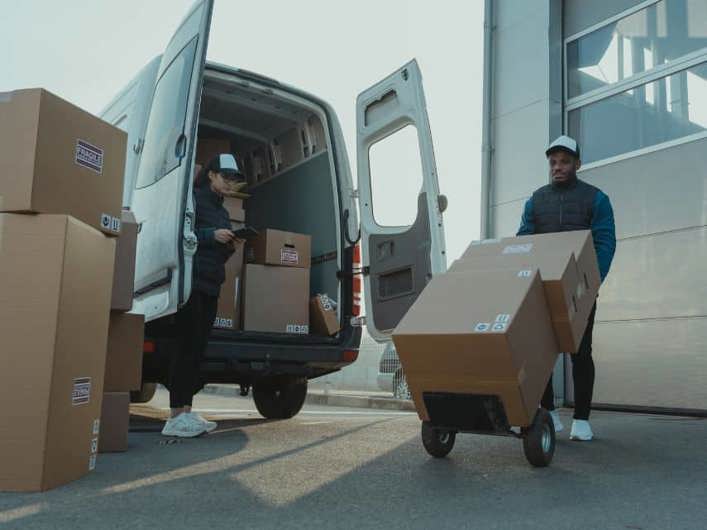
Research conducted by the University of Moratuwa found that training warehouse workers was a top-three factor affecting the efficiency of warehouse picking.
Proper employee training can prevent picking mistakes, familiarise pickers with picking locations (reducing total travel time), and create autonomy as workers gain a complete understanding of their role.
Here are some examples of warehousing processes your training programme should cover:
- Use of inventory management software or other digital tools that your workflows rely on.
- Physical operation of any tools and equipment, such as forklifts and mobile scanners, required to pick an order.
- Carrying out the various order-picking methods that you follow to fulfil orders.
- Health and safety protocols and contingency plans.
A great way to find out which parts of the job are confusing or difficult to learn is by simply asking your current warehouse staff. They’ll be able to inform you which processes could benefit from being included in a training programme, and which ones require little education to fully grasp.
Order Picking Automation: Methods and Tools
With the right technology, you can automate and optimise your warehouse order picking process.
Automated warehouse picking can boost productivity, improve safety and accuracy, and allow you to be more flexible with where you store your goods.
Here are 5 common automated order picking methods to consider:
- Pick-to-light order picking. This method works by installing pick-to-light LEDs around your warehouse. A picker scans a barcode associated with the order they’re about to pick, triggering the LEDs corresponding to each item on the order. The LEDs start to glow, giving the picker a visual picking path to follow.
- Voice order picking. The voice-picking method involves a picker receiving verbal instructions through a headset. They’ll be told which items to pick and their locations in real-time, minimising downtime and reducing the risk of errors.
- Mobile scanner order picking. This method requires that all items in the warehouse have unique barcodes. Pickers are equipped with mobile barcode scanners that display the items they need to pick and their respective locations. A picker will scan each item as they pick them, and the scanner will alert them of any picking errors as they go along. This method helps to improve picking accuracy and minimise time spent looking for items.
- Order picking robots. These are robots that pick orders in an automated, programmatic way. They can improve accuracy and efficiency by being programmed to retrieve items from an order without the need for human interference. Order picking robots come in a variety of forms, from simple mounted robot arms to highly customisable AS/AR systems.
- Order picking software. One of the first steps you can take to automate your picking process is to install live inventory management software. This software will cut labour costs and boost productivity by converting customer orders into automatically generated pick lists that contain product SKUs, quantities, and warehouse locations.
Warehouse Order Picking Software: What You’re Looking For
If you want to improve your order picking process, you’ll need to get an order management system in place first.
Inventory management software like Unleashed makes the fulfilment process simple, efficient, and fast by automating many of the tasks involved in processing customer orders and acquiring new stock.
When deciding which order picking software is right for you, consider:
- Your monthly budget – Can you afford it?
- The ROI of implementing and using the new software – Is it worth it?
- Complexity and training time – Is there a less-complex, easier-to-learn alternative that has all the features you need?
- Scalability – Does the software have the capacity to scale alongside your business? Are there tiered pricing options?
- Flexibility – Are there sufficient customisation options to perform all the tasks you need?
Start your 14-day free trial and see how inventory management software can improve your order picking process.
Frequently Asked Questions
What is the next step after order picking?
After order picking, the next step in the fulfilment process is order packing. This involves verifying that all picked items match the customer’s order, securely packaging them, and preparing them for shipment. Packing is followed by labelling and dispatch, where the order is handed over to the carrier for delivery.
What is the 5S rule in warehousing?
The 5S rule is a lean methodology used to organise and maintain efficiency in the workplace, including warehouses. It stands for:
- Sort (Seiri): Remove unnecessary items.
- Set in Order (Seiton): Arrange items for easy access.
- Shine (Seiso): Clean the workspace regularly.
- Standardise (Seiketsu): Establish consistent processes.
- Sustain (Shitsuke): Maintain and review standards.
Applying 5S improves productivity, safety, and reduces waste in warehouse operations.
What are the duties of an order picker?
An order picker is responsible for:
- Retrieving items from storage locations based on pick lists.
- Ensuring accuracy by checking SKUs and quantities.
- Using equipment such as carts, forklifts, or barcode scanners.
- Maintaining safety standards while handling goods.
- Delivering picked items to the packing area for shipment.
In some warehouses, order pickers may also assist with stocktaking and inventory updates.
