
The Ultimate Guide to Lean Manufacturing, Principles, and Supply Chain Logistics
Lean manufacturing is a production management strategy that aims to drastically reduce waste and maximise workplace productivity.
By implementing lean principles into production processes, manufacturers can benefit from shortened lead times and fewer operational costs without sacrificing the quality of goods produced.
This guide tells you everything you need to know about lean manufacturing: how it works, where it comes from, and the strategies for successfully implementing a lean system in your manufacturing facilities.

In this guide
- What is lean manufacturing?
- The origin of lean thinking: Toyota Production System
- 3 lean manufacturing examples from the real world
- The 5 lean manufacturing principles
- Lean manufacturing methods
- Lean manufacturing techniques
- Lean logistics: A critical pillar of lean supply chain
- The lean inventory management toolkit
- Lean manufacturing software
- Lean manufacturing FAQs
What is lean manufacturing?
Lean manufacturing, also called lean production, is a business methodology that focuses on eliminating waste and streamlining production processes to save time, money, and resources. The primary goal of lean manufacturing is to generate more value for the customer.
It achieves these reductions by adopting a just-in-time approach to stock control and shortening cycle, throughput, and inventory flow times through the elimination of any activities that do add value for the customer.
Just-in-time inventory management system and efficiency gains achieved through process automation comprise the cornerstones of modern-day lean manufacturing.
Why is lean manufacturing important?
In today’s highly competitive playing field, modern businesses need effective ways to improve manufacturing productivity and bring operational costs down.
As well as boosting revenue and profit, these optimisations also hold benefits for the end customer. Lean manufacturing ensures goods are made to the highest standard and delivered in the shortest time possible. That means customers receive the products the want, when they want them, and are pleased by the quality of goods purchased.
Other key benefits of lean manufacturing include:
- More efficient business performance
- Accurate, cost-effective inventory control
- Reduced cost of goods manufactured
- Improved flexibility that allows rapid responses
- Prevent the underutilisation of equipment
- Reduced waste in perishable products and dated stock
Lean manufacturing can be implemented by manufacturers of all sizes. It’s beneficial to both large enterprises and small–medium operations looking to scale sustainably.

Advantages of lean manufacturing
The main advantages of lean manufacturing include:
- smoother production flows
- reduced cycle times
- less inventory
- lower production costs
A lean operation means only dealing with the supplies, equipment, and labour required to meet current demand. Space and movement are conserved in lean manufacturing facilities. This leads to greater production efficiency.
The elimination of activities with no value-add increases productivity and improves connectivity for faster decision-making.
Lean means fewer defects and errors, less time spent waiting, and less complexity.

Disadvantages of lean manufacturing
The most significant disadvantage of lean manufacturing is that it allows little room for error. Any equipment or labour failure may lead to irregularities or cause the entire operation to fall behind.
In the event of a breakdown, employees may be unable to switch to another machine because with lean manufacturing, everything is being utilised. Production disruptions can in turn lead to delivery failures and order fulfilment delays, resulting in customer relationship issues and the potential to lose business to competitors.
Similarly, the global supply chain disruptions of 2020–2023 were likely exacerbated by the global reliance on lean principles.
With widespread border closures and illness, businesses that operated on slim inventory levels were quickly impacted, causing a ripple effect down the supply chain as their customers were delayed in turn.
The origin of lean thinking: Toyota Production System
Often attributed to the operational model utilised by automobile company Toyota in the 1950s, lean manufacturing follows a set of principles aimed at eliminating the “seven wastes” (Japanese: muda) ideated by former Toyota engineer Shigeo Shingo.
Toyota developed a series of simple innovations based on Ford’s assembly flow production to provide both continuity in process flow and a wide variety in product offerings.
It was Japanese engineer Ohno Taiichi who first devised the Toyota Production System (TPS): a philosophy that would eventually be picked up by US companies and evolve into lean manufacturing.

Lean manufacturing has now been adopted by industries across the globe, and has evolved since the days of the Toyota Production System.
The use of automation has expanded lean manufacturing concepts, with technology focused on reducing human operator-error while maintaining lean manufacturing principles.
Today, a new generation of technology is transforming lean manufacturing.
Widely available cloud manufacturing software, autonomous robots, machine learning, and the Internet of Things have streamlined operations and offer real-time, holistic views of planning and production processes.
3 lean manufacturing examples from the real world
Here are three common examples of lean manufacturing principles utilised in large and small enterprises.
Example 1: BMW
Lean production is at the core of BMW’s value chain.
The car maker built a record 2.51 million cars in 2021 – just over 6,000 cars every day – and leans heavily on JIT coordination for lean efficiency, productivity, and continuous improvement.
BMW has developed value-added production principles to create better flow, and repeatable, robust processes for complete value stream optimisation.
Example 2: Dell
Dell was a pioneer in lean manufacturing and even offers training in the Six Sigma framework.
Their made-to-order PCs were made possible through JIT inventory and robust supplier networks – and the lower inventory costs unlocked by lean manufacturing gave Dell a competitive edge.
Today, the company is staying true to the lean principle of continuous innovation by revising its manufacturing processes. Dell has re-engineered their systems and rationalised its technology infrastructure.
The company’s strategy is to streamline its lean principles to evolve as a global business with greater flexibility to adapt to changing market conditions.
Example 3: Sager Beer Works
Sager Beer Works in Rochester, New York, knows that lean manufacturing works for SMEs and craft breweries. That’s because partner and brew master Paul Guarracini, a supply chain manager and lean systems director, bought his experience of implementing lean methods in the US, Europe, and Asia, and applied them to his brewpub.
The successful craft brewery and taproom is a good example of how lean methods are an effective way for SMEs to gain a competitive advantage; Paul is now active in educating other independent brewers in lean manufacturing techniques.

The 5 lean manufacturing principles
Lean manufacturing is based on five principles designed to create value and eliminate waste and redundant action. These principles help formulate the basis of all lean thinking.
The five principles of lean manufacturing are:
- Specify value
- Identify the value stream
- Establish flow
- Implement a pull system
- Continuous improvement
Here’s how they work.

1. Specify value
The first and most critical step in the lean process is identifying the value produced. Lean manufacturers should consider the product they are delivering, against the price customers pay.
Using qualitative and quantitative techniques such as interviews and surveys, and with the aid of demographic data and online analytics, companies can identify value in terms of what the customer wants, how they want it delivered, and the price they can afford.
2. Identify the value stream
This step uses the customer’s value as a reference point to identify all the actions and processes that contribute to that value. Any activities that don’t add value are considered waste and should be eliminated.
Reducing or eliminating wasted steps unnecessary to the value stream gives the customer what they want while reducing the cost of delivering the product.
3. Create flow
Flow is a key concept of lean manufacturing. It refers to the transition of processes within a lean production system.
Any type of waiting is a waste. In creating a flow of value, the aim is to ensure value-adding activities flow smoothly from the moment an order is received to the moment the goods are delivered to the customer.
Strategies to improve flow in the manufacturing process include:
- Breaking down each production step
- Flattening out the workload
- Developing cross-functional teams with employees trained to be multi-skilled and adaptive
4. Establish a pull system
The aim of establishing a pull system is to avoid overproduction and only produce the value customers need.
Pull-based systems seek to maintain a balance between having the necessary materials and information required for a smooth flow of work, and limiting on-hand and work-in-progress inventory stock.
Inventory is considered the largest waste in any production system; therefore, a pull system employs just-in-time delivery and manufacturing to ensure goods are only created when they’re needed, and in the quantities required.
5. Continuous improvement
The pursuit of perfection, known as continuous improvement, is the ongoing effort to apply the first four steps.
For continuous improvement to succeed, it should be at the heart of the organisation.
In a lean manufacturing system, all employees should strive to continually improve processes – whittling away at inefficiencies and waste in the name of creating the most value for the customer, at the lowest cost.


Need leaner production planning?
Lean Manufacturing Methods
There are many ways to implement a lean manufacturing system into your operations. Here are some of the most useful lean production methods used by modern businesses.
1. Kaizen: The continuous improvement cycle
Kaizen means ‘change for the better’ in Japanese, and it refers to the lean production method of always striving for perfection. In business, it refers to a mindset of continuous improvement. Kaizen is about making small incremental changes that, over time, yield big results.
Kaizen pursues continuous improvement across multiple areas, including:
- Leadership
- Culture
- Processes
- Productivity
- Safety
- Technology
- Quality
For Kaizen to be successful in any workplace, it requires the involvement of all employees from top management to admin and operational staff.
2. Six Sigma
One of the most popular lean manufacturing methods is Six Sigma – an idea developed by engineers at Motorola in 1986.
The Six Sigma method provides manufacturing industries with tools for improving business processes, increasing performance, and decreasing process variations.
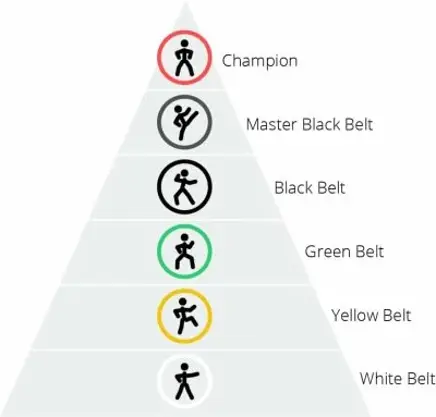
It’s distinctive for the way it qualifies practitioners using a hierarchy of karate-style belts:
- Yellow belt is a basic introduction to Six Sigma for newbies to the principles of lean.
- Green belt is the intermediate program that prepares participants for work on process improvement projects in an organisation.
- Black belt is the advanced program that prepares people to manage and lead project teams
- Master black belt, as the name suggests, is the prestigious program that prepares the recipients of this level to become educators and experts in the field.
3. Kanban
Based on the Japanese words for ‘sign board’, Kanban, in its simplest form, is a lean production process that uses boards to make work activities visible at every step in a process, aiding the flow of information. More broadly, the intention of Kanban is to improve flow with clear, visual communication of tasks, progress, and limitations.
A basic Kanban board is characterised as a vertical flat surface divided into three columns.
These columns represent the three primary states of any task:
- Requested
- In-progress
- Done

Job notes are added to the columns on a Kanban board, moving through the workflow to demonstrate the progress of tasks through the three stages.
Today, Kanban has evolved into a full philosophy for process management of all kinds and is especially used within software development.
However, any business can make use of Kanban principles by using a modern software tool like Asana or Trello, where users record tasks on visual notes that are moved from one side of a job board to another as they’re completed.
Here’s a quick video showing how a Kanban system can be used for managing inventory:
4. Just-in-time manufacturing
Another lean manufacturing method is the application of just-in-time (JIT) manufacturing.
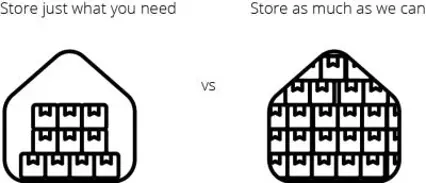
The goal of JIT is to establish a workflow that reduces costs and delays within the production process and distribution. It does this by maintaining as near to zero inventory stock across the organisation and its supply chain as possible.
While cost-cutting is a primary objective of being lean, JIT also prioritises the efficient use of time, effort, and resources.
In practice, this can mean ordering more frequently from local suppliers as opposed to ordering in bulk from cheaper, international suppliers to reduce the time wasted in transportation.
This can also result in a more environmentally friendly operation and a more resilient supply chain.
How just-in-time manufacturing works
JIT works on the foundation that goods must only be produced and moved based on actual demand or consumption. This is sometimes called ‘pull production’ – where work is ‘pulled’ through the factory in response to a sales order.
Successful pull production generally requires online manufacturing inventory management software.
When you receive a sales order, manufacturing software lets you quickly and easily:
- Ship any assembled stock immediately
- Begin production based on what can be manufactured using components held in inventory
- Order the remaining components needed to complete the order.
Lean manufacturing vs just-in-time manufacturing
The key difference between lean manufacturing and just-in-time manufacturing is that lean manufacturing principles focus on the customer, and just-in-time manufacturing focuses more on the internal aspect of the manufacturing process.
JIT can be implemented as a method of lean production because it helps eliminate the waste that is excessive inventory stock.
5. 5S in lean manufacturing
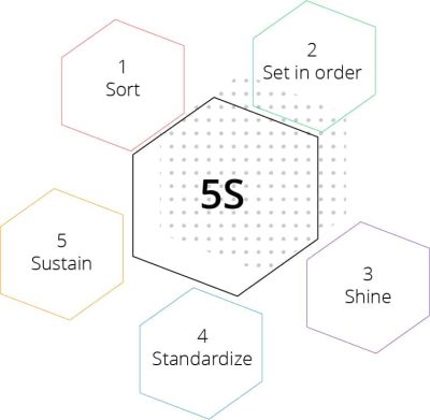
5S is a visual system of management based on five Japanese principles.
As a lean production method, the 5S principles can be systematically applied to organise your workspaces in order to improve flow, reduce process numbers, and eliminate waste.
Here are the 5 principles of 5S lean manufacturing and how to implement them:
- Seiri / Sort: Sort through workspaces and keep only the essential materials required to complete tasks. Anything not used to complete work processes is removed from the work area.
- Seiton / Set in order: Organise everything left in the workspace and ensure each item has a designated place. Position materials in a logical way that makes tasks easier for workers to complete.
- Seiso / Shine: Keep workspaces clean and well organised to optimise value-driven work. Make the workspace shine by cleaning and maintaining the newly organised space, including any necessary maintenance on machinery, equipment, and tools.
- Seiketsu / Standardise: Develop a set of organisational and process standards that specify the rules for how and when sort, set in order, and shine tasks will be performed. Standards and procedures can include tools such as lists, charts, and maintenance schedules.
- Shitsuke / Sustain: Conduct regular audits to ensure that the new disciplines and practices are being maintained and sustained. To achieve this, it’s important that you include employees in the process, educating and encouraging active participation in 5S.
Bedding 5S into the workplace
5S rules are an easy and logical way to increase understanding of lean principles.
The simple steps of 5S are a foundation of Six Sigma, and an easy starting point for implementing lean principles into a business.
Use these five steps to guide your rollout of 5S in the workplace:
- Train employees. Provide staff with 5S training to ensure they understand the systems and feel adequately prepared for the implementation of 5S. This also demonstrates the business’s commitment to the lean philosophy.
- Build a team. Select a reliable, engaged and committed team to champion the 5S system and help drive its success.
- Provide resources. Design a program for implementation and allocate the time and resources to it.
- Engage staff. Encourage staff to contribute their thoughts and suggestions, and listen to their ideas and provide resources to help develop them. Recognise effort with tangible and intangible rewards.
- Measure results. A simple 30-second test will determine if the 5S system has been implemented successfully. Materials, tools, information, and documents should be easily accessible in less than 30 seconds. Act to remedy any steps that fail the 30-second test.
Lean manufacturing techniques
We’ve covered the main concepts in lean production – here are a few additional lean manufacturing tools and techniques for implementing a lean manufacturing system in your business.
Control charts
Control charts are used to check workflows and determine how much variation exists in a process. Variations that sit within organisational control limits demonstrate that processes are working, while variations outside these control limits indicate there are problems that need correcting.
Jidoka
Jidoka means ‘automation with a human touch’. The lean manufacturing technique of Jidoka is where machines stop automatically upon detecting any abnormal condition and human operators fix the defect to prevent the issue from reoccurring.
The four basic elements of Jidoka include:
- Detection: Each piece of machinery should be installed with a system for detecting irregularities such as product defects and equipment failures.
- Stoppage: Machines should automatically stop working when an anomaly occurs, ceasing production to contain the issue. Mechanisms should be in place for operators to manually stop production if they notice any abnormalities.
- Response: When auto-stop mechanisms halt production, operators must evaluate the situation, take necessary action, and call for assistance if required. Remedial activities should be undertaken within a set timeframe and a decision made whether to resume production.
- Prevention: If quick fixes enable production to continue, managers should retrospectively investigate the problem and implement permanent solutions. When the issue persists past the set timeframe, a designated team is tasked to investigate and address the root cause to ensure production continues as quickly as possible.

Multi-process handling
Multi-process handling is when a machine operator sequentially undertakes multiple process tasks that contribute to materials flow. These multi-process operations are critical to the success of JIT manufacturing operations, which rely on cross-trained, multi-functional teams capable of performing several tasks in the production line work cell.
It is therefore imperative that multiple skills training is provided to employees expected to handle multi-process operations. Simplifying machines and processing steps is also key to the success of multi-process operations.
Poka-yoke
Poka-yoke is the a lean manufacturing technique focused on mistake-proofing.
Based on the theory of preventing errors before they occur, poka-yoke helps minimise waste by stopping defective items from moving down a production chain. The system is designed to help staff find and correct defects before they reach the next phase of production.
Poka-yoke applications can be preventative safety measures such as interlock switches in manufacturing that shut off equipment when the machine guard is lifted – or light curtains that detect when someone is too close to a dangerous machine, switching it off to prevent injuries.
Examples of poka-yoke in daily life include the use of sensors on building, elevator, and train doors; overflow outlets in vanity basins; and the spelling and autocorrect functions on electronic devices.
Single-point scheduling
Single-point scheduling is a lean production technique that attempts to counteract the difficulty of production scheduling at several different points within a value stream.
Some processes move faster – and others slower – than the average, resulting in parts moving through the system at varying speeds. Scheduling fluctuations are even more complicated when scheduling is done at multiple points along the value stream.
To avoid inventory stock being scattered along the value stream, a pacemaker tool is used to request production from upstream processes. Upstream processes will not produce materials without receiving a pull signal from the pacemaker.
The processes downstream of the pacemaker are therefore managed to maintain a continuous production flow.
Total productive maintenance (TPM)
Based on the 5S component of lean manufacturing, the aim of TPM is to circumvent breakdowns, accidents, defects, and disruptions caused by equipment stoppage.
TPM strategies operate on the premise that everyone with a manufacturing facility should participate in maintenance, not just the maintenance team.
By utilising the skills of all employees, maintenance can be integrated into everyday tasks to improve manufacturing quality and integrity.
Preventive maintenance and TPM work order scheduling can be automated using software solutions that help manage, monitor, and control all maintenance activities.
Value stream mapping (VSM)
VSM is a visual lean manufacturing tool that uses flowcharts to document each step in a work process. Value stream mapping provides an overview and an easy analysis of the current state of a business’ value chain.
By illustrating and analysing material flow, VSM identifies waste and bottlenecks, reduces process cycle times, and maximises use of resources.
Work cell redesign
A work cell is the common-sense arrangement of resources in a manufacturing or business environment.
Work cell redesign determines the family of parts necessary for production of a product, and establishes the machinery, equipment and personnel needed within the work cell to get the job done.
Much like the 5S principle of ‘sort’, work cell redesign aims to eliminate time and movement waste.
Lean Logistics: A Critical Pillar of Lean Supply Chain
The five principles of lean logistics are derived from the principles of Lean Thinking. They’ve been adapted to support end-to-end supply chain management.
1. Determine value for the customer
The first task of lean logistics is to identify and define the value you’re aiming to create for the customer. In other words, it’s answering the question: What are my customers’ primary needs?
Specifying the value to provide customers will give you grounds for determining which of your supply chain processes are effective and which are a waste of time and resources.
2. Map out supply chain processes and identify waste
Once you understand what value the customer is looking for, you can start identifying which supply chain processes are aiding in providing that value and which are wasteful (do not add value).
First, map out every process along the supply chain to get a clear picture of where the delays, restraints, and excessive tasks exist. Once identified, these wasteful activities can be eliminated by optimising the processes they exist.
3. Optimise product flow efficiency
In this step, processes in the supply chain are redesigned to maximise value creation and minimise wasteful tasks. The goal is to make the product flow smoothly towards your customer.
Ideal product flow efficiency is achieved by optimising inventory control, minimising supply chain interruptions, and eliminating downtime. This is the core function of lean logistics, and is commonly referred to as ‘going lean’.
4. Establish a Just-in-Time strategy
To reduce inventory wastage, a pull system – also known as a just-in-time (JIT) strategy – is introduced. This is a process designed to minimise your stock-on-hand levels.
JIT strategies are demand-based: Goods are ordered, produced, and delivered as they’re needed by the customer rather than accumulating inventory. Therefore, information about customer demand must be available through the supply chain for this system to work properly.
5. Strive for continuous improvement
Finally, lean logistics is not a stagnant or one-off process. At its core, this methodology functions as a way of keeping your business accountable and efficient. As such, it should be considered an active and repetitive approach.
Once the principles above have been achieved, your business must continue to improve the fulfilment process – whether that be through regular audits, machinery upgrades, improved policies, or something else.
Benefits of lean logistics
Lean logistics cuts out wasteful actions and provides an efficiency injection to your business. But what does that mean when it comes to tangible results?
Below are seven of the biggest benefits of lean logistics.
Minimises inventory risk
Lean logistics reduces downtime so that production lines can flow smoothly. This means products spend less time being held up for prolonged periods. And since it also reduces the quantity of goods being stored, you have less risk of taking a hit should a disaster strike your storage facility.
Reduces excess costs
Optimising your processes means cutting out any unnecessary activities or expenses and slimming down your necessary ones. In this way, the business requires less capital investment to run.
Improved cash flow
When you’ve got all your value locked up in inventory, it’s easy to run dry on spendable cash. The JIT strategy that supports lean logistics ensures you only store the minimum amount of goods required to keep customers happy.
Produce goods and fulfil orders faster.
Once you cut out all those surplus activities and systems, your production and fulfilment processes should run much more efficiently. Goods can be produced in greater quantities, faster. And orders can be picked, packed, and shipped in the shortest possible time.
Requires less storage space
Less inventory comes at a lower cost to keep around. You can rely on a smaller warehouse or factory for storing unsold and unfinished products, meaning you save on rent, power, staff, security, and warehouse equipment.
Make your customers happier.
Ultimately, the purpose of lean logistics is to give customers more value (and save yourself some cash in the process). When your production and testing processes are optimised for efficiency, your customer has less time to wait for products to get upgrades and orders to arrive at their doorstep.
Creates a cycle for constant improvement
Lean logistics isn’t a quick fix; it’s a complete overhaul of the thinking behind your business activities. This means that once you implement it, it’s always there. Lean logistics becomes the framework for regularly assessing and optimising your processes.

The disadvantages of lean logistics
Since we’re discussing the positives, it’s important to also touch on the downsides of implementing a lean logistics strategy.
Key disadvantages of lean logistics include:
- Requires powerful inventory software. Leanness can only be achieved by pulling accurate historical sales and inventory data, which requires advanced inventory management software.
- Switching strategies can be disruptive. You’ll have to completely overhaul most of your current processes, which can be time-consuming and distracting for staff.
- May require operational changes. It’s possible that, by eliminating wasteful activities, you also create staff redundancies or opportunities to hire new staff. Both circumstances require careful navigation and can be costly.
- Higher risk of cutting things too fine. Factors like human error and environmental conditions can sometimes push lean logistics to a breaking point. And since the minimum reorder quantities and safety buffers are extra low, those unexpected disruptions can mean you run out of stock too soon.
Ask yourself why you’re considering switching to a lean logistics strategy approach. Then determine whether it will help you achieve that target. If the benefits of lean logistics don’t align with your business goals, you might be after a different kind of solution.
The Lean Inventory Management Toolkit: A Value Stream Mapping Walkthrough
Value Stream Mapping (VSM) is one of the most powerful lean tools for inventory management. It helps businesses visualise every step in the product journey, identify inefficiencies, and eliminate waste. Below is a comprehensive, actionable guide to implementing VSM in your operations:
Step 1: Define the scope and product journey
Start by selecting a product family or SKU that represents a significant portion of your revenue or operational complexity.
- Map every stage: raw material sourcing, production, storage, order fulfilment, and delivery.
- Use flowcharts or digital VSM tools integrated with your inventory management software for real-time visibility.
Step 2: Identify the seven wastes (TIMWOOD)
Waste is the enemy of lean. Use the TIMWOOD framework to pinpoint inefficiencies:
- Transportation – Excess movement of goods between facilities.
- Inventory – Overstocking beyond demand, tying up cash flow.
- Motion – Unnecessary worker movement in warehouses.
- Waiting – Idle time between production or shipping steps.
- Overproduction – Making more than customer demand.
- Over-processing – Adding features or steps that don’t add value.
- Defects – Faulty products requiring rework or scrapping.
Pro Tip: Advanced inventory software like Unleashed can generate reports on slow-moving stock, bottlenecks, and order delays to help identify these wastes quickly.
Step 3: Collect real-world data and metrics
Data-driven decisions are key to lean success. Gather metrics such as:
- Cycle Time
- Lead Time
- Inventory Turnover Ratio
- Order Fulfilment Rate
Actionable Tip: Use dashboards in inventory management systems to track these KPIs in real time.
Step 4: Design the future state map
Create a leaner version of your process flow:
- Remove non-value-adding steps.
- Introduce pull systems (JIT) to align production with actual demand.
- Consolidate tasks to reduce motion and waiting times.
- Implement Kanban boards (physical or digital) for visual workflow management.
Step 5: Implement, monitor, and continuously improve
- Roll out changes incrementally to minimise disruption.
- Use inventory management software to automate replenishment, set min/max stock levels, and forecast demand.
- Schedule regular audits and use warehouse KPIs to measure improvements.
- Encourage a culture of Kaizen - continuous improvement through small, consistent changes.
By following this walkthrough, businesses can reduce inventory waste, improve cash flow, and create a resilient supply chain that responds dynamically to customer demand.
Lean manufacturing software
Lean manufacturing software refers to digital systems that aid in the streamlining of production processes and help to eliminate waste in a manufacturing business.
Examples of lean manufacturing software include:
- Inventory control software
- Cloud manufacturing software
- ERP systems
- MRP systems
- Order management software
Depending on the requirements of your business, you may benefit from some or all of the features offered by these solutions.
Key lean manufacturing software features to look for:
- Kanban system
- Real-time inventory tracking
- Business analytics and supplier performance monitoring
- B2B eCommerce portal for customers
- Accounting and eCommerce software integrations
- Bill of materials management
- Value stream mapping
- Demand forecasting
- Supplier collaboration
- Manufacturing process automation
Learn how manufacturing inventory management software works in this short demo of Unleashed:
Lean manufacturing FAQs
Is there value in a lean manufacturing qualification?
Lean certifications ensure practitioners understand and can effectively apply the lean philosophy to real-world situations. Training and development are gained through numerous methods, with understanding demonstrated by comprehensive practical and exam-based assessments.
As technology and lean manufacturing evolve, lean practitioners can continue to build their knowledge, skills, and experience through recertification or higher-level training.
Should you hire lean manufacturing certified staff?
An increasing number of studies have found that lean manufacturing has significantly contributed to a company’s success. Lack of effective leadership, logistical support, and communication are some of the reasons companies are unsuccessful in lean implementation.
Along with poor plant layout and quality variations of raw materials, these challenges can be addressed by employing lean manufacturing-certified staff. However, hiring lean certified staff needs continuous upper management support to generate results.
How do you get lean manufacturing certified?
Lean philosophies are becoming standard practice in contemporary manufacturing enterprises. In response to this, there has been a growth in education and training providers that offer certifications and accreditation in lean and Six Sigma concepts.
How do you implement lean manufacturing?
Now that you understand how lean manufacturing works, here are some steps you can take to implement it into your business model:
- Watch a lean manufacturing software demo. Discover how cloud-based manufacturing software helps you eliminate waste and streamline processes across the business, saving you hours of admin time and boosting workplace productivity.
- Sign up for a free 14-day trial of Unleashed manufacturing software. Experience first-hand the ways lean manufacturing software can help you optimise production management workflows and provide more value for your customers with a free two-week trial of Unleashed.
- Chat to a lean manufacturing software expert to assess your business’s needs. Not sure where to start? Schedule a free consultation with one of our friendly experts for a free and honest assessment of your manufacturing needs.


Latest articles

The Edge - March 2026

10 Wholesale Distribution Industry Trends for 2026

10 Inventory Management Trends to Watch for in 2026

MOQ Meaning: Minimum Order Quantity Made Easy [With Formulas]

OEM vs ODM explained – what’s best for manufacturers?

Centralised vs. Decentralised Supply Chains — The Pros and Cons

10 Critical Supply Chain Management & Logistics Trends for 2026

Batch Production: Definition, Pros & Cons, Methods & Examples

Bullwhip Effect in the Supply Chain: Examples, Causes, Solutions

Cin7 Reviews: Features, Strengths & Criticisms