


Table of contents
- What are the most exciting innovations in food packaging right now?
- 8 eco-friendly food packaging trends
- What are the cost implications of switching to sustainable packaging?
- Frequently asked questions
What Are The Most Exciting Innovations in Food Packaging Right Now?
As sustainability continues to shape the future, food packaging is moving away from plastic to biodegradable materials. These are just a few of the most exciting innovations within the last few years.
1. Smart packaging with built-in sensors
Smart packaging is no longer a plan; it’s here. Using embedded sensors, QR codes, and RFID tags, this tech monitors freshness, temperature, and contamination in real time. It helps reduce food waste by alerting consumers and retailers when products are nearing spoilage. According to Market.us, the global smart packaging market is expected to surpass $52 billion by 2032.
2. Edible packaging
Imagine packaging you can eat. Edible films made from seaweed, rice, or fruit extracts are being used for wraps, sachets, and even condiment pods. Brands like Notpla are leading the way, offering zero-waste alternatives that are safe to consume or compost.
3. Biodegradable and compostable bioplastics
Plant-based materials like PLA (from corn starch) and PHA (from microbial fermentation) are replacing traditional plastics. These bioplastics are compostable and suitable for everything from snack pouches to takeaway containers. Companies such as Danimer Scientific are scaling these solutions for mainstream use.
4. Algae and mushroom-based packaging
Algae-based films and mycelium (mushroom root) packaging are gaining traction for their low environmental impact. Algae grows rapidly and requires minimal resources, while mycelium is being used to create protective packaging for glass jars and chilled goods.
5. Water-soluble and refill systems
Dissolvable packaging, used for items like soup bases and supplements, eliminates waste entirely. Meanwhile, refill systems are becoming more common, allowing consumers to reuse containers and top up with biodegradable refill packs, especially for pantry staples.
6. Active packaging for extended shelf life
Active packaging goes beyond containment. It includes oxygen scavengers, moisture absorbers, and antimicrobial films that extend shelf life and reduce the need for preservatives. This innovation is particularly valuable in reducing spoilage across the supply chain.
7. Nanotechnology in packaging
Nanotech is being used to create ultra-thin antimicrobial coatings and to encapsulate antioxidants and preservatives. These advancements help maintain food quality and safety without altering taste or texture.
8 Eco-Friendly Food Packaging Trends
1. Compostable food packaging
Compostable food packaging is designed to be a more sustainable option. It’s often hailed as a non-toxic, alternative food packaging that creates less plastic pollution by breaking down into soil if it’s released into the environment.
But, there’s a bit more to it than that.
Hot compostable food packaging
A lot of compostable food packaging is made from a polymer called Polylactic Acid (PLA). PLA can’t be broken down in a typical home composting environment. It needs temperatures of over 60C – which is hotter than home compost will get – so needs an industrial facility to first shred it, then treat it under sustained high temperatures. If you dump compostable plastic in a landfill or backyard compost heap, it won’t break down properly at all.
While commercial composting facilities are becoming increasingly widespread, many countries (even countries offering compostable plastics) still lack the infrastructure and dedicated collection systems, making this a less appealing eco-friendly food packaging option than more sophisticated home-compostable alternatives.
What’s more, PLA can’t be recycled via the normal recycling streams, and will contaminate regular recycling batches if put out with conventional recycling, so typically is best disposed of in landfill.
In short: think twice before opting for PLA-based food packaging, unless you have the full product stewardship system in place to deal with it.

Home compostable plastic packaging
If your company is to offer an eco-friendly food packaging option that users can compost at home, you need to invest in packaging products that are certified. This means they are backed up by an authoritative certification, such as:
- The European OK Compost Home standard (from TÜV Austria)
- The Australasian Bioplastics Association AS 5810 standard
Searching for local packing providers certified by either of these schemes is the best way to access the growing range of genuinely compostable food packaging products.
Read more: Find out about Kokako Coffee’s home compostable drinking chocolate packaging here.
2. Bioplastics
When we use the term ‘bioplastic’ here, we’re talking about plastic that is derived (fully or partly) from a biomass, or material of biological origin rather than from fossil oil. Examples include PLA, starch-based polysaccharide and PBS.
The term is often overused, however, leading to some confusion over what is and is not actually a bioplastic, and what customers should do with these products when they are finished with the packaging. For example, many bioplastics aren’t biodegradable, and must be thrown out or recycled like normal plastic. Such materials include PTT and biobased PE and PET.
There are also normal plastics (i.e. called fossil-oil based plastics) which are not plant-based but can biodegrade.
Offering bioplastic to your customers
Switching to bioplastic is usually a better, more eco-friendly way to sell products than using fossil-based plastics – many can be manufactured in a more sustainable way, producing as much as 80% less greenhouse gases than, say, polystyrene (Ingeo).
That said, regulators are watching brands for how they market their plastic to consumers. You’ll have to be careful as to your claims regarding what your packaging is capable of, and what people are meant to do when they are finished with it. For example, in New Zealand, claims that a product is ‘recyclable’ when in fact it can only be recycled in limited facilities, could risk a fine from the country’s Commerce Commission.
Of course, the easiest way out of that risk is to be honest on your labels.
3. Biodegradable food packaging
We’ve used the word ‘biodegradable’ here a few times, and the phrase is booming in popularity both at the manufacturing and consumer level. But, biodegradable packaging doesn’t always do what you think it does. If you want to truly invest in eco-packaging, you need to know how to spot the good and bad biodegradable plastics.
What should ‘biodegradable packaging’ really mean?
Biodegradable refers to plastic that can be broken down in an organic fashion (eaten by microbes, essentially) and turned into biomass, gas or water. But, once again the term can be a bit loose – and manufacturers of so-called biodegradable products sometimes do not offer timeframes for the degradation process. This could mean that their plastic still takes years and years to degrade in any noticeable fashion.
According to the Royal Society of Chemistry, biodegradable plastics degrade much slower in natural environments than in industrial composting, with significant microplastic production and minimal breakdown after several months in soil.
So how do you find truly biodegradable food packaging?
Be alert for ‘green-washing’ – that is, products that claim to be environmentally friendly but are vague on how, or don’t live up to the claim. ‘Biodegradable’, unfortunately, is one term that’s notorious for being used to green-wash plastic packaging products.
See if you can find out the timeframe for the biodegradability of any plastic packaging you intend to use for your food or drink products. If it takes longer than a year to degrade; if it breaks down into micro-plastic instead of biomass – or requires a special facility for which there is limited infrastructure, it’s not going to be as environmentally friendly as you think and you’ll struggle to market it to consumers.
When hunting for compostable products as opposed to biodegradable, look instead for the certifications as mentioned above.
Read more:
- United States Environmental Protection Agency Frequently Asked Questions about Plastic Recycling and Composting
- United States Federal Trade Commission Green Guides
4. Recyclable food packaging
In the hierarchy of eco-friendly food packaging options, many people consider recyclable packaging to be better than biodegradable but less desirable than compostable (where composting facilities are available). This is because they can be turned back into raw materials to be used again, whereas biodegradable plastic just breaks down – so everything put into creating it is, in a sense, lost when it cannot be reused.
However, recycling is different everywhere you sell – cities all offer different options, and consumers aren’t always sure what to do. So, what are the most recyclable food packaging materials on the market?
The 5 most recyclable food packaging materials:
- Reusable packaging (see below). If customers can avoid having to recycle, that’s always best.
- Paper. 68.2% of cardboard generated in the US in 2018 was recycled, the highest rate out of any material (EPA).
- Aluminium. Aluminium is generally considered easier to recycle than glass, however it’s safer for the planet to make new glass than new aluminium. So, if you can find already-recycled aluminium, that’s excellent (it can be recycled indefinitely). On the flip side, strong demand for new aluminium can be quite damaging for the environment.
- Glass. Glass can also be reused indefinitely making it a great recyclable choice. But, facilities to recycle glass aren’t as common as other products so you have to take into account the recycling plants available in your sales areas before committing to glass packaging. It’s also heavier to transport, which adds to overall fuel use.
- Plastics 1 and 5. Most plastic can only be recycled a handful of times before it loses too much quality. PET (the plastic with the Resin Identification code – or ‘recycling number’ 1) is considered a desirable recyclable plastic, as is Polypropylene (number 5). On the other had materials such as Polystyrene (6) and LDPE (4) (like soft plastic bags) are rarely recyclable.
5. Reusable food packaging
Recycling is great and the world needs to do more of it, but the recycling process of breaking materials down and reforming them still takes energy and creates pollution.
By contrast keeping food packaging out of the waste cycle and reusing it in its original form is virtually always a better option. Indeed, research company PreScouter labelled reusable containers as the future of the food and beverage industry.
For a product package to be reusable, however, it has to be robust. This often rules out paper as an option, with companies preferring materials such as stainless steel, silicone, glass and robust plastic.
Reusable packaging ideas in use by popular brands
- Stainless steel coffee cups with silicone lids
- Takeaway food containers made of robust plastic
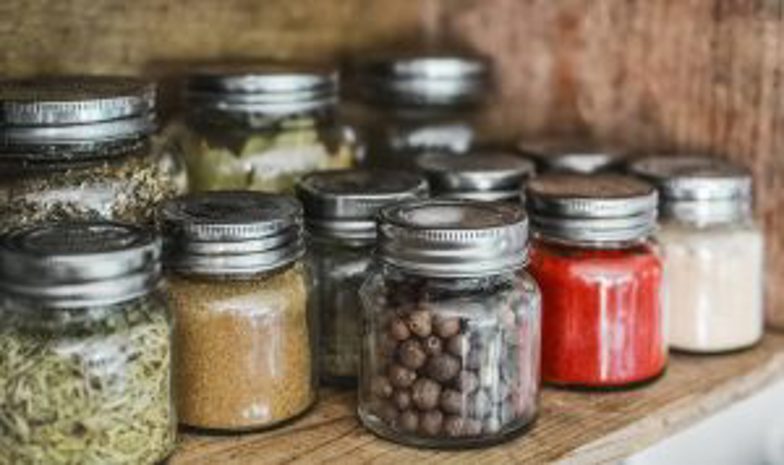
- Glass jars with metal or plastic lids – bonus points if the label can be easily peeled off
- Silicone containers with plastic lids
Barriers to the widespread uptake of reusable packaging
Cost and convenience are two of the biggest barriers to reusable packaging growing more widespread.
As a food manufacturer, you’ve probably already looked at the list of packaging materials above and balked at the costs that come with mass-producing products in something like stainless steel.
Convenience is also a factor. Many brands offer discounts for any customers that can return their reusable packaging (again, more common at the retail end), but if customers can’t be bothered doing this, the effect is entirely lost.
For now, manufacturers must be clever about how they offer reusable packaging. For some, it’s a customer experience differentiator (i.e. personalised packaging). Others use it as an excuse to adjust business model or product, like Blueland that is offering dissolvable cleaning tablets instead of liquid soap (to be dissolved in reusable bottles), or Algramo which is placing vending machines in stores so customers can refill reusable containers at low cost.
Innovations in reusable packaging
Other innovative models now available include packaging as a service systems, such as Huskee Swap, which offers a reusable coffee cup wash and replace service.
Meanwhile Sydney-based B2B coffee manufacturer Kua Coffee has gone zero waste with its packaging, in part by using Unleashed Software’s serial number tracking system to follow all of its reusable coffee drums, which are recorded as an asset on sales orders and checked in and out of their warehouse as they dispatched and returned.
Learn more about Kua Coffee’s operation here.
6. Optimised food packaging
Optimising food packaging is another trend gaining traction around the world. Here, optimisation refers to making packaging better or more efficient in some way – minimising the amount of packaging, or making it thinner/lighter.
Where manufacturers can’t turn to bioplastics and the like, optimising packaging instead (or in conjunction with more eco-friendly materials) can be a way to reduce the carbon footprint of you packaging while also cutting costs.
Of course, there are barriers to this and it isn’t right for everyone. Here we’ve listed out some common pros and cons to help you understand if optimised packaging might be right for you.
Advantages of package optimisation:
- Reduce carbon footprint by using less material in packaging – for example less interior filler or plastic wrap, smaller product labels, or using a greater proportion of eco-friendly materials.
- Cut the cost of packaging, again by using less of it. An example here might include shrinking the thickness of glass, or replacing triple-walled corrugated cardboard to double.
- Cut logistical costs by reducing weight, perhaps by moving to another material (i.e. from metal to bioplastic or paper).
- Pass reduced costs on to the customer.
Barriers to package optimisation
- There is usually a trade-off to be had when reducing weight, for example in packaging durability.
- Regulations in certain industries can hinder packaging innovation.
- A lack of more eco-friendly materials, or a lack of the facilities required to recycle or compost them, means they aren’t always much better than the alternatives.
Read more: Sustainable Manufacturing: The ultimate guide for SMEs
7. Eco-friendly logistics packaging materials
Even if you find ways to reduce the carbon footprint of your individual products or cut costs by optimising the package design, as soon as you load it all up for freight transport you will almost immediately come across more plastics: think packing peanuts, bubble wrap, and shrink wrap.
There are, however, eco-friendly alternatives here, too. Such examples include:
- Biodegradable packing peanuts
- Corrugated bubble wrap
- Packaging made out of recycled materials
- Packaging made out of organic materials
Eco-friendly logistics packaging example: Flexi-Hex
Flexi-Hex, a sustainable packing in business in the UK, was started by Will and Sam Boex after receiving a large amount of bubble wrap on an item and decided something needed to be done regarding products being shipped in unsustainable packaging.
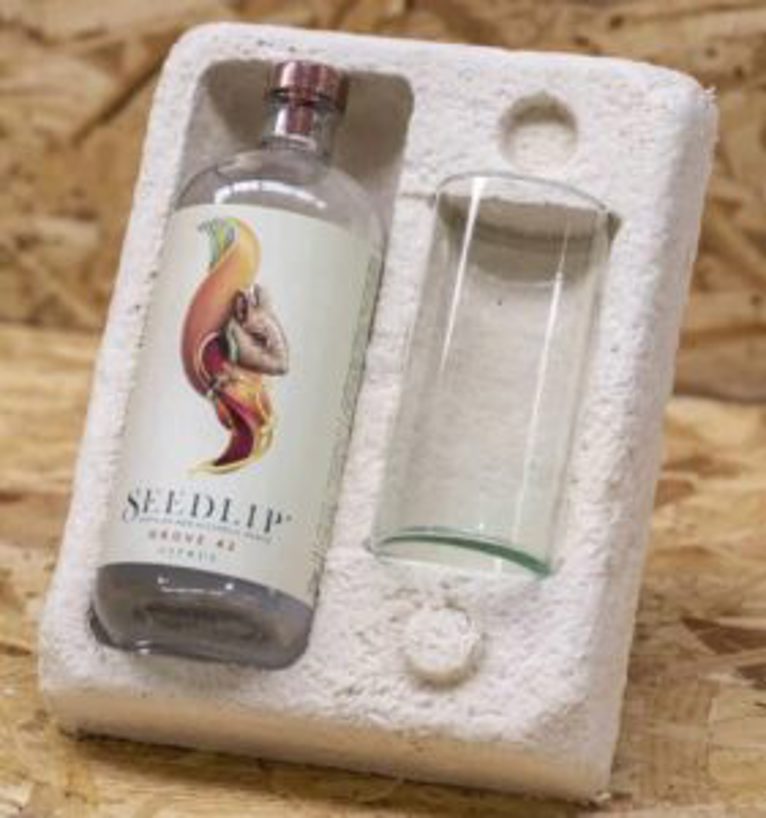
They created a plastic-free honeycomb design to protect fragile items, including spirit and champagne bottles, which doesn’t negatively impact the environment.

8. Eco-friendly packaging for pet food
Pet food manufacturers are also able to contribute to the good health of the planet thanks to the raft of advancements being made in pet food packaging. This is good timing, too, as a Trivium Packaging report found that 74% of pet parents would pay more for sustainable packaging, and two thirds said environmentally friendly or recyclable packaging is important to them.
The same environmental concepts of reducing, reusing and recycling can all be applied to pet food manufacturing. In one success story, Earth Animal, Pet Food Experts and the Pet Sustainability Coalition jointly ran a campaign in 2020 to collect flexible plastic pet food and treat bags from US consumers to be sent on to a recycler for the second phase of the test (grinding the plastic into pellets that could be upcycled into new pet products). The collection exceeded expectations – consumers proved willing to bring back their plastic, and now the second phase can proceed.
What can pet food manufacturers do to become more eco-friendly?
The short answer is to follow the same advice as in the rest of this article. Look for materials that can be optimised or easily recycled, and if using plastic then seek out either certified compostable materials or biodegradable materials that biodegrade properly.
Keep track of your inventory and food ingredients with a food traceability software like Unleashed to optimise your eco-friendly strategies.
What Are The Cost Implications of Switching To Sustainable Packaging?
Switching to sustainable packaging often involves higher upfront costs due to the need for alternative materials and updated production processes. Compostable and recyclable options can be more expensive and may require changes to supply chains or equipment.
However, these costs can be offset over time through reduced transportation expenses, improved brand perception, and alignment with evolving consumer preferences and regulations. As demand grows and sustainable materials become more widely available, the cost gap is expected to narrow, making the transition increasingly viable for businesses. However, while costs remain high, customers are willing to pay more for sustainable products, giving businesses the opportunity to offset the costs by charging more.
Frequently Asked Questions
What is new in food packaging?
Food packaging is evolving fast, with smart tech and sustainable materials leading the way. Innovations like sensor-enabled packaging, edible films, and biodegradable bioplastics are helping reduce waste and improve safety. Materials such as algae, mushroom root, and water-soluble wraps are also gaining popularity for their low environmental impact.
How to make food packaging attractive?
Attractive packaging blends sustainability with smart design. Using eco-friendly materials like compostable bioplastics or reusable containers appeals to conscious consumers. Clear labelling, earthy aesthetics, and tactile finishes enhance appeal, while personalised or refillable options add value and brand differentiation.
What are the food packaging trends in 2025/2026?
Key trends include compostable and certified home-compostable packaging, reusable systems, and smart features like freshness sensors. Bioplastics, algae-based films, and mushroom packaging are scaling up, while refill stations and packaging-as-a-service models are reshaping consumer habits.
What are the challenges of food packaging?
Challenges include limited infrastructure for composting, confusion around terms like “biodegradable,” and higher costs for sustainable materials. Durability and regulatory constraints also complicate innovation. Brands must balance eco goals with practicality and clear communication to avoid greenwashing.
How to improve food packaging?
Improving packaging means choosing certified sustainable materials, reducing excess, and optimising design for weight and efficiency. Honest labelling and smart features like QR codes help guide consumers.
Sources used in this article
- Nielsen: A Natural Rise in Sustainability Around the World
- Contour Sales: Compostable Packaging
- Food Mag: Defining Compostable & Biodegradable Packaging
- Good Start Packaging: Biodegradable vs. Compostable
- Plastics.org.nz: Home Composting
- BioPak: What is PLA?
- Plastics.org.nz: Bioplastics & Degradables
- Food Packaging Forum: Bioplastics
- Stuff.co.nz: Environmental Claims Risk Fines
- BBC: Biodegradables Won't Solve the Plastic Crisis
- Swap Box: Biodegradable Packaging
- The Guardian: Biodegradable Plastic Bags
- Because Health: Biodegradable vs. Compostable vs. Recyclable
- Reader's Digest: The Most Recyclable Materials
- National Geographic: 5 Recycling Myths
- EPA: Facts & Figures About Materials Waste
- Euronews: Glass Bottles vs. Aluminium Cans
- Packaging Europe: A Deep Dive into Reusable Packaging Solutions
- Food Dive: Reusable Food Packaging
- Pet Food Processing: Sustainable Packaging Remains Priority
- Pet Food Industry: Sustainable Pet Food Packaging
- Mondi Group: Sustainable Pet Food Packaging is Here
- Pet Sustainability: Program Aims to Bring Groundbreaking Recycling Solutions to Pet Industry
