

Nurfatin did a great job!!
Nurfatin did a great job!!
Inventory replenishment is a small but critical part of inventory management. Most inventory management tools offer replenishment tools, while a handful of platforms are built entirely on managing inventory replenishment with a few inventory management features sprinkled on top.
Choosing the best inventory replenishment software can feel daunting because everyone claims to be the best. We did some research and found 12 of the best tools on the market to save you the legwork.
Disclaimer: We have added our own software to the list, Unleashed, but only because it received many praises from our customers on Trustpilot.
In this guide, we boil down their capabilities into a few sentences so you can quickly get to signing up for a demo. Let’s jump in.

Inventory replenishment software is a digital tool that helps manage inventory levels. Depending on which tool you use, it may automate part or all of the process.
Here’s how it works:
Inventory replenishment capabilities are typically part of broader inventory management tools, though some tools are specifically built to manage inventory replenishment.
Because running out of stock leads to loss of business and reputation.
Inventory replenishment keeps your business well-stocked, in the right quantities. Optimising inventory levels and replenishing inventory with the right quantity helps you avoid tying up too much capital in inventory while maintaining adequate service levels.
Look for the following features when choosing inventory replenishment software:
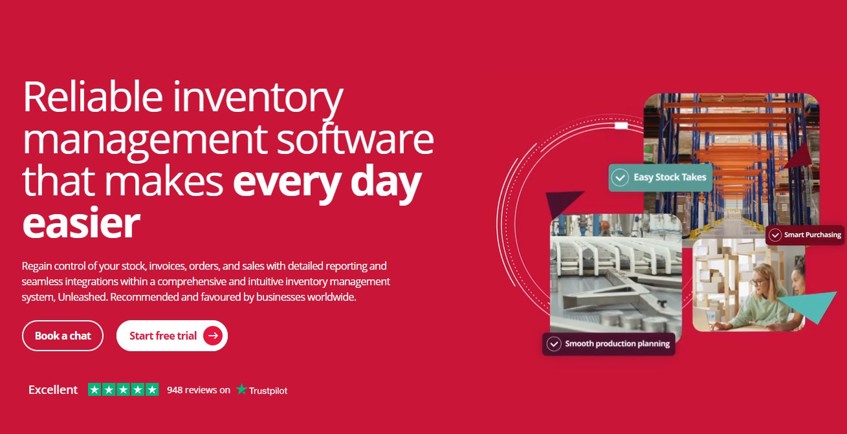
Unleashed is a cloud-based inventory management platform. It offers a comprehensive inventory solution that provides visibility and control over inventory, sales, production, and suppliers. It includes features like multi-stock warehouse management, automated purchase ordering, cost-of-goods tracking, and more.
Small- to medium-sized manufacturing, wholesale, and distribution businesses that need inventory control and demand forecasting capabilities, as well as streamlined replenishment processes.
Some features require higher-tier plans and add-ons (such as demand forecasting).
Nurfatin did a great job!!
Great to work with and very helpful. Rutuja always responds with thorough answers and great follow up. Excellent customer service and support.
I had a very sticky question and Dabby was beyond amazing. She went above and beyond by testing my theory in the sandbox before I implemented it liv…
Very good software with solid support. Being using it on a daily basis.
Our company switched to Unleashed from a larger MRP system and we are really impressed with how user friendly it is, and how well it integrates with …
It has all the functions I need, and easy to convert from Xero. Jue from Unleashed is very patient and helpful with all the issues during the early s…
Great service from Ruxandra Brezga. There were recently some small issues with our system which seemed to be taking time to be resolved. I sent an em…
Ruxandra Brezga was very helpful and nice in the meeting's we had
Super helpful webinar by Claudiu & Radu on Xero Reconciliation
The software is snappy, does 95% of what we need it to do. It's early days yet, but it's looking like a gamechanger for us in terms of getting on top…
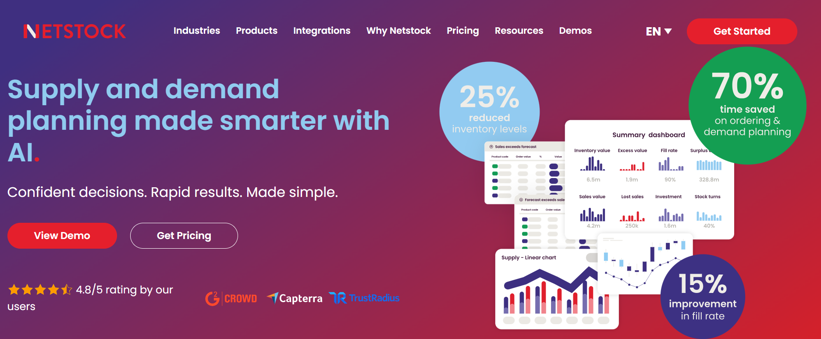
Netstock is a demand and supply planning tool that uses AI to help forecast demand, optimise stock levels, and reduce stockouts and excess inventory. It offers dashboards and tracks supplier performance metrics.
Small- and medium-sized businesses with complex stock requirements (many SKUs, multiple warehouses, or variable lead times) that need smarter replenishment recommendations.
Darren M., Product Development Manager on G2:
"Accurate forecasting has allowed us to project a stock mix that will halve our inventory value while maintaining 95% Fill rate. Currently we are acheiving our 95% target fill rate, but with a stock turn of 3.4. Netstock is helping us get our stock turn up, and our stock value down."
Custom pricing only (starts at $900/month).
ToolsGroup offers an automated replenishment product that creates time-phased plans, factoring in demand variability and supply constraints. It’s a highly customizable system tailor-made to optimise the replenishment workflow.
Mid-to-large companies with complex supply chains that want to automate replenishment across their network.
Miles Norman, Merchandise Planning Director on Feature Customers:
"The company’s replenishment and ordering process would run over days. Manual intervention became the norm to combat system deficiencies. These deficiencies were hampering the entire value chain, negatively affecting user productivity and impacting our ability to satisfy customers – effectively compromising the core mission of the company."
Not published on the website.

BlueYonder offers inventory optimisation, and allocation and replenishment solutions. It uses AI and ML to help retailers and distributors maintain the right balance of stock across locations and minimise stockouts.
BlueYonder is best for large retail, distribution, or omni-channel businesses with many SKUs, multiple locations/warehouses, and fluctuating demand.
Debasish S., Project Lead on G2:
"JDA Demand Planning is very good and mostly useful for eCommerce business."
Not published on the website.
Cin7 is an all-in-one inventory management platform. In addition to smart replenishment tools, Cin7 also offers demand forecasting capabilities, inventory velocity reports, material requirements planning, and more.
Small-to-midsize product businesses that need multi-channel inventory control and automated replenishment without adopting an overly complex, enterprise-grade tool.
Penny G., Director of Ecommerce on Capterra:
"Overall I like that it provides a robust inventory management system with room to grow."
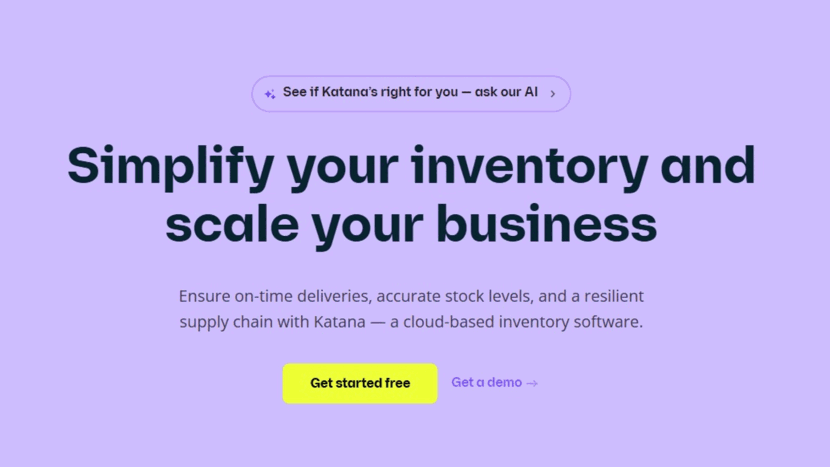
Katana MRP is a cloud-based material resource planning (MRP) system designed to help small and medium-sized manufacturers streamline inventory replenishment and optimisation processes. It offers an intuitive interface and scalable platform, making it suitable for businesses looking to improve production efficiency and inventory management.
Small- to medium-sized manufacturers looking for a scalable solution to manage inventory, order fulfilment, and production.
Ash M., DIrector of Technical Services on G2:
"I use Katana daily to manage my manufacturing and fulfillment channels for a single location. I came from tracking everything in spreadsheets so the features have been great and I find it pretty intuitive to use."
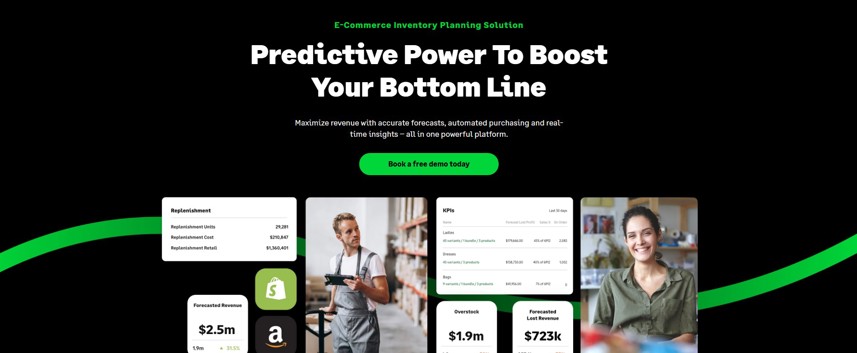
Inventory Planner is a demand forecasting and inventory-planning tool that helps businesses predict what customers will buy and know when and how much to reorder. It supports multi-location inventory, supplier management, minimum order quantities (MOQs), and syncing purchasing with marketing promotions.
Ecommerce, retail, wholesale, and manufacturing brands of any size that hold inventory across warehouses, stores, and 3PLs and want to reduce excess stock and make buying decisions based on accurate forecasting.
Andy R., Head of IT on Capterra:
"We needed to identify what was selling, what was dead stock and what we likely to run out of before the next delivery arrived. With long lead times this is tough to manage but IP has really helped us step the business up."
Not published on the website.
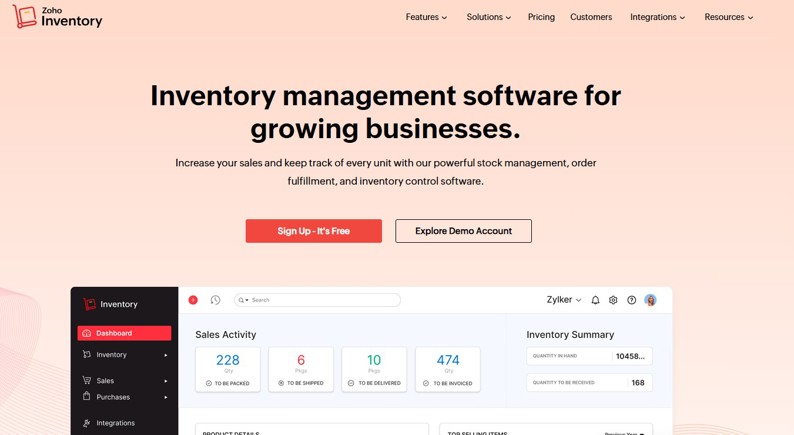
Zoho Inventory offers a built-in replenishment function that automatically identifies items that fall below a predefined reorder point. It generates purchase or transfer orders to restock that SKU.
Zoho Inventory is best for small- to medium-sized product-based businesses that need cost-effective, easy-to-configure replenishment and inventory features with good scaling across locations.
Puneet G., Business Supplies and Equipment on Capterra:
"With Zoho Inventory, we have visibility into the life of our stocks, movement, and all the purchase orders at one place."
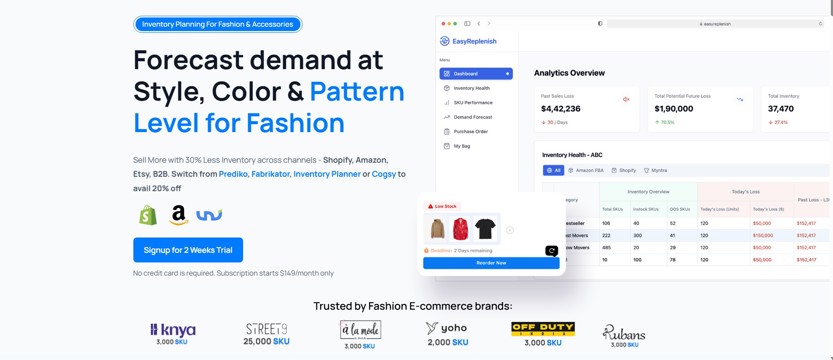
EasyReplenish is an AI-powered inventory optimisation and replenishment tool. It can forecast demand, suggest purchase quantities, and help find slow-moving SKUs for rebalancing across warehouses and stores.
EasyReplenish is best for small-to-medium-sized ecommerce, D2C, or retail brands (especially those with multiple warehouses or fulfilment locations) looking for smarter replenishment and inventory efficiency without enterprise-scale overhead.
Pricing depends on your monthly sales in units and the number of replenishment locations (WHs, 3PLs, stores, etc.). Here’s the pricing mentioned on the website:
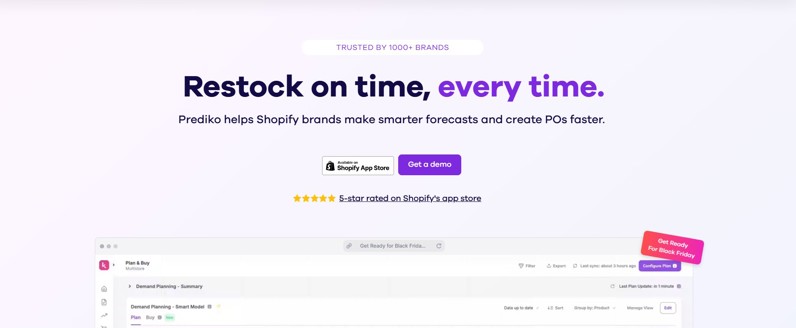
Prediko is an AI-powered inventory and demand planning tool designed for Shopify brands that helps forecast sales, generate restocking alerts, plan purchase orders, and manage raw materials and BOMs.
Growing Shopify-based businesses that want smarter forecasting, better purchase order workflows, and raw material planning without needing a full enterprise planning suite.
The official website only mentions the base plan, but Prediko’s Shopify page offers more details about pricing:
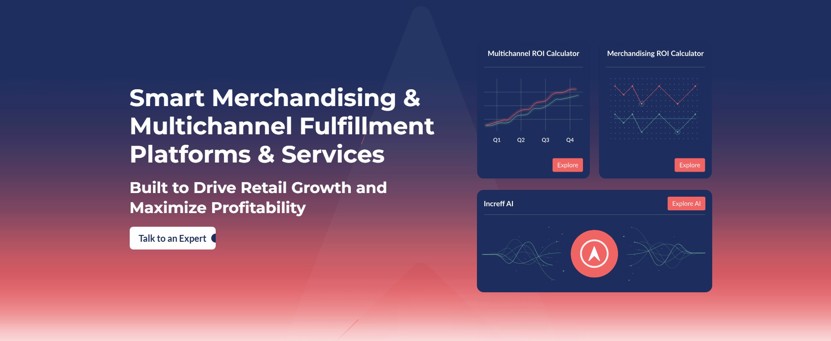
Increff offers a merchandising software suite with allocation and replenishment features. These features automate stock replenishment based on demand trends, lead times, size/colour/style attributes, and “True Rate of Sale” (or True ROS, a proprietary tool to improve demand forecast accuracy).
Fashion, apparel, and lifestyle retailers (especially those with multi-store/omni-channel presence) who want to reduce overstock, stockouts, and inefficiencies in their replenishment style.
Not published on the website.
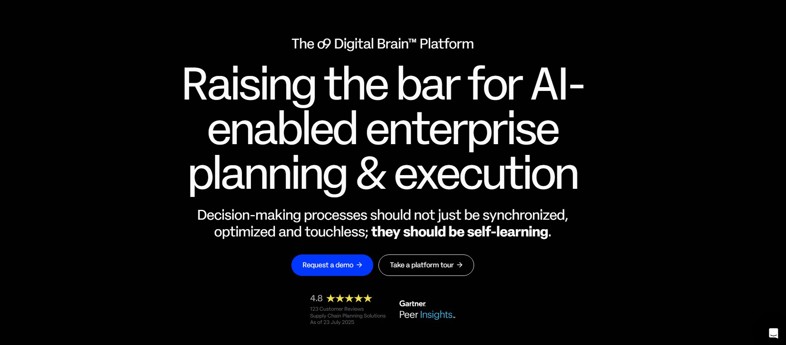
o9’s replenishment and flow planning tool is an AI-powered module (part of the o9 Digital Brain). It unifies demand sensing, inventory optimisation, flow-level planning, and scenario simulation to recommend optimal order timing and quantities across the network.
Retailers, distributors, and manufacturers with complex, multi-echelon supply networks that need enterprise-grade, AI-driven allocation and replenishment.
Not published on the website.
Unleashed is the best platform to manage inventory replenishment. Here’s how Unleashed supports smart replenishment:
An automated stock replenishment system is a digital tool that monitors real-time inventory levels and notifies you when inventory dips below a defined threshold. Many systems can also automatically generate a purchase order and send it to an approved vendor after your approval.
The best replenishment software depends on your needs and budget. Unleashed is our top pick because it offers an extensive inventory management feature set, including replenishment capabilities. However, if you’re low on budget, tools like Prediko and Zoho Inventory may work for you, provided you don’t mind giving up on the various inventory management capabilities you get with Unleashed.
Inventory management is a broader concept. It includes tracking, controlling, and optimising your entire inventory, from purchase to sales. Replenishment is a part of inventory management. It focuses on restocking items at the right time and in the right quantities.
Replenishment software can automate stock replenishment for you. Each platform offers varying levels of automation. Most tools can alert you when inventory drops below a defined threshold. However, many also auto-generate a purchase order based on preconfigured order quantities and send it to the manager for approval. Once approved, the software sends the purchase order to a pre-approved vendor.
Yes, AI can automate stock replenishment by identifying an optimum order quantity and safety stock levels based on historical sales, seasonality, lead times, and other factors.
Not sure if Unleashed is the best fit? Try it 14 days for free - no credit card required.

