
What Is Aged Inventory & What Is The Impact
Those in the business of selling goods will have at least a vague understanding of the nature of excess or obsolete inventory and the effects these forms of inventory can have on the business holding them. A related inventory type is known as ‘aged inventory’. In this article, we define aged inventory and outline the implications it can have on inventory management and the success of a business overall. We also provide a few key steps business owners in this predicament can take to rectify the situation and get things back on track.

What is Aged Inventory?
Aged inventory generally refers to inventory stock that has been held for longer than six months, usually due to low consumption or slow sales. Aged inventory is not an overnight occurrence; however, any surplus of inventory stock is costing you money and restricting your cash flow.
Why Does Aged Inventory Matter?
Aged inventory can significantly impact inventory management. Businesses must decide how to handle these items and recover the cash tied up in aged stock. If you have aged inventory, you will have to do an audit, that is, create an aged inventory report, in order to clearly identify which products are in the ‘aged’ category. Once you have done so, you will need to ensure that any future orders take into account the products which have entered the ‘aged category’ and therefore should no longer be re-ordered (or perhaps shall only be ordered for certain periods of time).
Implications on inventory control
Aged inventory reports provide insight into your purchasing behaviours. As a result of these reports and depending on the quantities of aged inventory, you can look at ways to improve inventory control activities and may also consider changing how you purchase new products.
The implications of aged inventory reports on inventory control practices are that you can assess the time products spend in inventory and focus your attention on managing slow-moving items. This, in turn, improves inventory purchase decisions and assesses the costs of maintaining inventory quality.
Conversely, failure to run aged inventory reports means you will have less insight into inventory costs, will not know what your slow-moving products are, or which products are costing the most in inventory carrying costs. Having an aged inventory report ensures that decision-making by senior management is better informed by providing additional insight into which stock moves and how quickly it turns, allowing you to focus your attention on the slowest-moving items and develop a better method of inventory control.
Aged Inventory Reports

Aged inventory reports are documents that provide key metrics about the status of your inventory, and the information provided is grouped by cost currency, product line, product identification, unit of measure and inventory class. As one of the important inventory reports, an aged inventory report expresses:
- Quantities, value, location and descriptions of the various inventory stock items
- The length of time inventory stock typically sits on the shelf or in the warehouse before being used or sold.
- Any associated carrying costs, such as storage and maintenance costs, which have been incurred during the time that the items have been held.
- Delivery schedules and order volume requirements of suppliers that may impact the time inventory items are still sitting in stock.
Inventory control issues can then be identified using the aged inventory report and improvements made as a result of these metrics. Ultimately, increasing stock valuations, improving the business's cash flow and the ability of the business to service existing or new finance agreements.
What Does an Inventory Ageing Report Look Like?
Below is a practical example of an inventory ageing report:
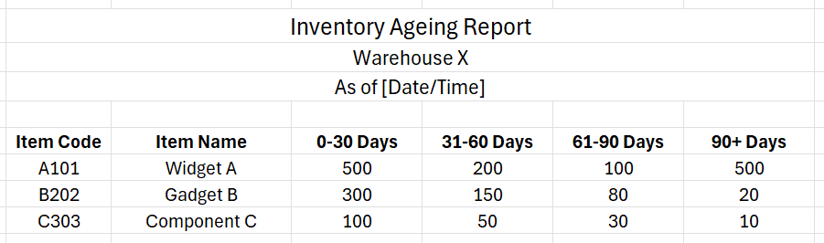
An inventory ageing report should include a clear view of how long raw materials, work-in-progress (WIP) inventory and finished goods have been in stock for. These are often broken down by ageing categories to identify slow-moving or unused items.
These ageing categories often are:
- 0-30 days: New inventory. Usually, well-stocked and meets current demand.
- 31-60 days: Regular inventory. These items such be closely monitored to ensure they’re selling at an expected rate.
- 61-90 days: Older inventory. Consider ways to encourage sales, such as promotions.
- 90+ days: Clearance inventory. These items need attention ASAP. Consider a clearance sale to free up inventory space.
How To Deal With Aged Inventory
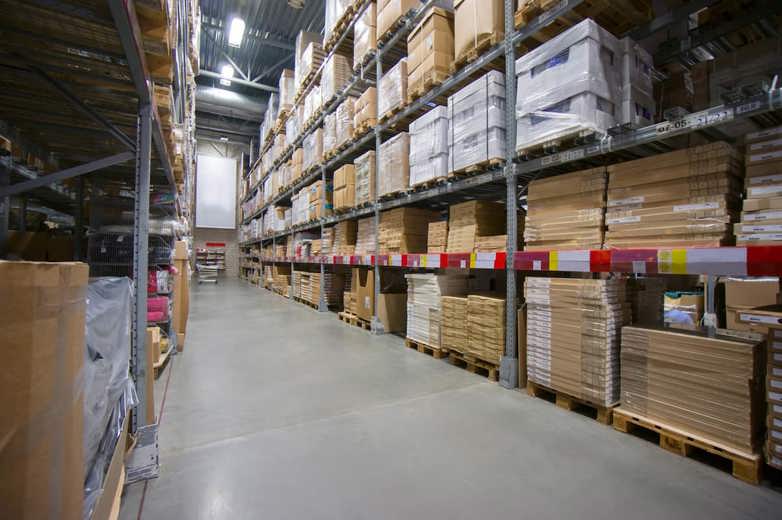
The key to reducing aged inventory is to act quickly and often. Managed correctly, the disposal of aged inventory can provide opportunities for increased sales and has the potential to generate positive customer experiences. Some common ways to rid yourself of aged inventory include:
- Negotiating a return of aged inventory with your suppliers. Returns to the vendor are normally based on a percentage of your sales and should be undertaken at least twice a year as a minimum.
- Clearance sales. Offering heavy discounts is a common tactic for ridding yourself of aged inventory stock. When offering extreme discounts, however, take care to limit these sales activities in time and duration; if these events occur too frequently, customers may wait to purchase, and you could find it difficult to sell anything at full price.
- Bundling. Certain products and services can be grouped together and sold at a slightly reduced price. By bundling complementary items, you can combine slow-moving products with those that have a faster sell-through rate. This helps to clear a lot of merchandise at the same time, and customers will often see this as getting greater value for their money.
- Create one-off sales events or limited-time offers to reward long-term customers, rethink visual merchandising and displays to attractively present over-stocked items at the event. Repackage low-cost items as giveaways or gifts with purchase.
- Distribute aged inventory stock between stores or create exclusive deals for your eCommerce channels.
- Selling aged inventory to a liquidation company is an option for those wanting to free up space quickly and with minimal effort. Potential profit may be lost, but you can clear your warehouse of excess stock, reduce carrying costs and receive an instant cash boost.
Another way you can help free some of your shelf space from aged inventory is by encouraging retail staff to upsell these particular products. You may even consider incentivising staff with a commission to focus on selling those particular items.
As a last resort, you can consider donating the aged inventory to a local charity. While this is not an ideal situation, as you are not gaining back any of the original cash required to attain the items, donating to local causes is a great way to improve your reputation within the community, which can help increase the likelihood of customer retention and attraction.
How Can Unleashed Inventory Management Software Help?
Proactively managing aged inventory is essential for maintaining healthy cash flow and optimising inventory turnover. Regularly reviewing aged inventory reports and implementing strategies to address slow-moving stock can significantly improve operational efficiency and profitability.
Inventory management software ensures that each item is in date and of the highest quality, through in-depth real-time reporting and batch tracking. See what inventory management software can do for you. Start your 14-day free trial today.
