
Key Difference Between B2B & B2C Supply Chain
Supply chains are vital to every business, ensuring all products arrive at the intended destination promptly. However, not all supply chains are created equally. How products move in a B2B vs a B2C model can impact everything from negotiation strategies to inventory management.
In this article, we’ll look at the key difference between B2B and B2C supply chains, explore why inventory strategies differ and how tools can help businesses stay competitive when lead times are longer and margins are tighter.

Table of Contents
Understanding B2B vs. B2C Supply Chains

Supply chains play a key role in getting a product or component to another user. The two most common transactions are business-to-consumer (B2C) and business-to-business (B2B) when it comes to selling goods and services.
In B2C, the goods and services are sold to a consumer who is the end-user of the product. However, in B2B, goods and services are sold between companies.
Relationships are integral to businesses, and it’s essential to understand how their supply chains are structured to suit their business model. Often, you will experience differences in the negotiation approach, the duration of the supply chain, the number of customers involved, and the quantity of items ordered.
Negotiating in the Supply Chain
Negotiation in supply chains can involve payment terms, performance indicators, prices, quantities and more. In B2B relationships, there is a significant level of negotiation that occurs in the supply chain.
It comes into play much more than in B2C, where consumers don’t have as much negotiation power in their purchases.
When a company is trying to manage their stock control, they will try and optimise supply chain deliveries and quantities to suit their warehouse capacity. Businesses selling the products might want to send bulk shipments to the buyer on the other end.
However, that buyer’s warehouse might not be able to cope, and those quantities would impact the health of their stock control.
The level of bargaining power that exists between the buyer and seller within the supply chain differs. In a B2C supply chain, the business generally has greater bargaining power due to size and resources, with little to no negotiation occurring. While in a B2B supply chain, there is a greater level of negotiation between both parties.
Who Has the Shorter Supply Chain?
While B2B supply chains are often shorter, certain industries, such as automotive, may involve multiple tiers. B2B transactions might be more direct, and short supply chains are effective at delivering what their buyers need, between a few companies.
Conversely, B2C supply chains often require input from more players. Their supply chain might have multiple producers, wholesalers and retailers before it lands in the hands of the consumer. B2B companies usually have to manage stock control for a few key items that they sell in bulk, whereas B2C companies might have more inputs from more suppliers for specialised products. This means their chain gets longer and longer.
B2B supply chains will often only involve the two companies concerned in the transaction, with one selling a product or service directly to the other. In contrast, B2C supply chains are often longer because they tend to involve numerous producers, wholesalers and retailers.
Differences in Customer Numbers
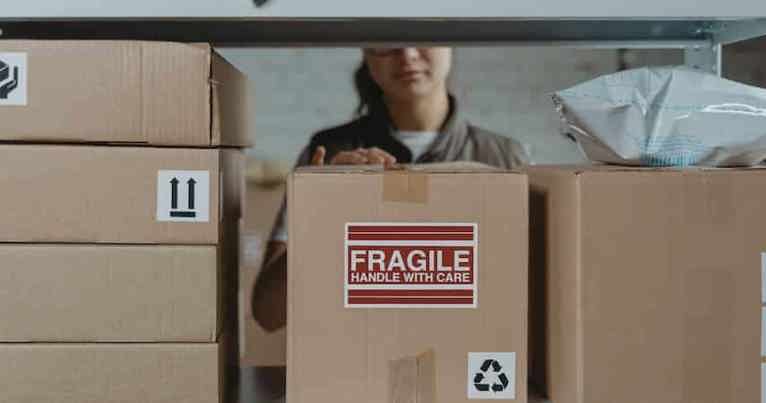
Customers vary when it comes to supply chains. In general, B2C businesses have a higher number of customers that they engage with. It’s important for both B2B and B2C to manage their relationship and keep customers satisfied. However, it becomes harder for B2C to do this at times when the scope of their end-users is so large.
B2B have the opportunity to build close-knit relationships with those that they do business with. There may not be many of them, but the relationships along the supply chain are important due to the financial significance that each one brings.
A B2B company may only have a handful of key accounts. Each of those accounts could keep their business afloat and revenue looking good. If a relationship is managed poorly and you lose one of these accounts, it could put your business in jeopardy.
However, at the end of the day, maintaining healthy supply chain relationships and seeking customer satisfaction is supremely important in both B2B and B2C transactions.
In a B2B supply chain, there are generally fewer customers and relationships are developed around mutually beneficial arrangements to help manage performance, establish accountability and encourage continuous improvement. The much greater number of customers in a B2C relationship has important implications for how those relationships are managed by a business to gain repeat custom and to achieve and maintain brand loyalty.
Volume
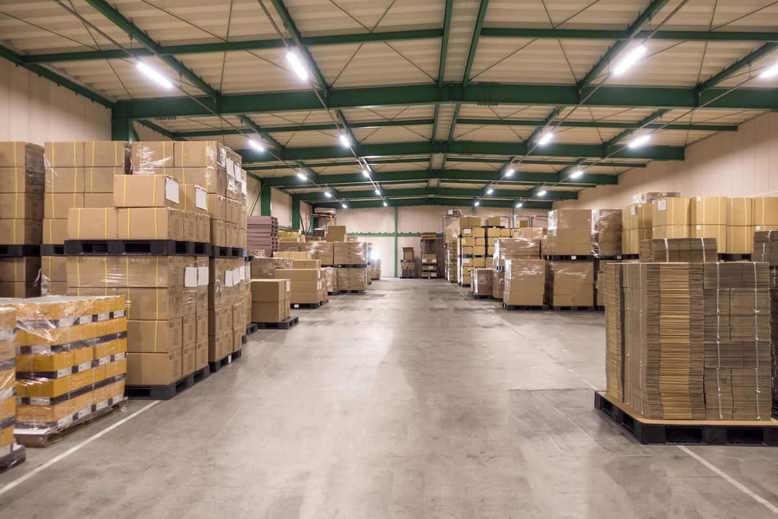
B2B sales tend to be higher in volume than B2C sales. According to Capital One, B2B sales represent 82% of the projected $32.1 trillion total B2B and B2C global e-commerce revenue.
For example, a company might buy five pallets of juice, whereas a consumer might only get two bottles. For this reason, each relationship in a B2B supply chain is proportionately more important than relationships in a B2C supply chain, in which each customer may only purchase a single unit and may never be a repeat customer.
Furthermore, each purchase is typically a high involved purchasing decision where units are for commercial use only and have greater value, for example, an aircraft carrier from Boeing.
Sales volumes are higher in a B2B supply chain than in a B2C supply chain because B2B involves the sale of bulk services or inventory stock required by business clients for production purposes or for resale as part of a retail strategy.
Inventory Management for B2B vs. B2C
Inventory management plays a critical role in both B2B and B2C supply chains, but the strategies and tools used can differ significantly.
In B2B, inventory control is often focused on bulk stock management, warehouse optimisation, and real-time visibility across multiple locations. Businesses need to ensure they have enough stock to meet contractual obligations and production schedules, while avoiding overstocking that ties up capital.
Recent data shows UK SMEs increased excess stock by 206% in Q2 2025 to buffer against lead times stretching to 27 days, a clear example of why B2B inventory strategies prioritise resilience over speed.
In B2C, inventory management is more about speed, accuracy, and multichannel coordination. Retailers must balance stock across online stores, physical outlets, and third-party platforms, often with smaller quantities and faster turnover.
Tools like Unleashed’s Inventory Management Software helps businesses in both models maintain control, reduce waste, and improve customer satisfaction.
B2B eCommerce Supply Chain Management
While e-commerce has long been a staple in B2C retail, B2B companies are increasingly adopting digital platforms to streamline transactions. Online sales now account for up to 70% of B2B transactions in some markets.
Successful B2B eCommerce businesses connect the front-end customer experience with back-end operations like inventory control, order processing, fulfilment, and returns. This creates a seamless, transparent, and cost-efficient experience for both seller and buyer.
A single-stack approach to eCommerce is where a business employs a single integrated platform that incorporates the company website, CRM, financials, inventory control, warehousing, order management and order fulfilment.
With real-time visibility across all systems, businesses can:
- Avoid stockouts
- Improve pricing accuracy
- Enhance profitability
- Increase customer satisfaction
- Improve cross-sell and upsell rates
B2B merchants using single-stack platforms report better performance across inventory control, order fulfilment, and customer acquisition.
Ready to optimise your supply chain?
Explore the Unleashed B2B eCommerce Platform to learn how integrated systems can transform your supply chain.
Start your 14-day free trial and experience real-time control across your entire operation.
Frequently Asked Questions
Is Coca-Cola a B2C or B2B?
Coca-Cola operates as both B2C and B2B. They sell directly to consumers through retail channels – such as supermarkets – while also selling to distributors, restaurants and vending machine operators.
What differentiated B2B from B2C product management?
B2B focuses on bulk stock management, contractual obligations, and long-term relationships. Product management often involves optimising warehouse capacity, ensuring real-time visibility and meeting production schedules.
B2C priorities speed, accuracy, and multichannel coordination for smaller, faster-moving inventory. Product management is geared towards customer experience and brand loyalty.
What is the difference between B2B and B2C delivery?
B2B delivery is usually shorter and more direct, often involving only two companies. Bulk shipments are common, and delivery schedules align with contractual terms and warehouse capacity.
B2C delivery consists of longer chains with multiple intermediaries (producers, wholesalers, retailers) before reaching the end consumer. Delivery focuses on speed and convenience for individual customers.
